
Skip to content

18+ Adults only. Not medical advice.

Sexual Wellness & Discreet Shopping Guides for the UAE

Judgement-free, body-safe guidance for buying intimate products in the UAE — from first-timer buying guides and rose toys to cash-on-delivery, plain-box shipping, and what the law actually says. Written by a UAE-based editorial team, for adults 18+.

Latest guides

Male Masturbator Prices in the UAE: All 33 We Stock, From AED 190 to 620

Male Masturbator Prices in the UAE: All 33 We Stock, From AED 190 to 620

TL;DR: We stock 33 male masturbators, priced from AED 190 to AED 620, median AED 270 (checked November 2026). Sixteen are manual cups and sleeves between AED 190 and 340, thirteen are powered between AED 240 and 620 (all checked November 2026). The counter-intuitive finding from pricing the whole range: a basic powered model starts at AED 240, only AED 50 above the entry manual cup (both checked November 2026), so "electric means expensive" is not true at the entry level. What you pay for above AED 350 is not speed, it is the combination of functions in one unit. This page lists every product we sell, grouped by form, with the real price of each. What "male masturbator" actually covers The category is broader than most listings admit. Under one heading you will find four genuinely different products, and the price differences between them are mostly about form rather than quality. Manual cups and onaholes — a textured sleeve in a shell, or just the sleeve. No motor. You control the pace. These are the lowest-cost entry point and the largest group in our range. Powered units — thrusting, rotating, telescoping, vibrating, heating, sometimes voice. The motor does the motion. This is where the price range widens most. Sleeves and eggs — the texture without the shell. Simplest to make, lightest to store, and the least durable because there is no shell to hold the shape. Strokers — hand-held open-ended or through-channel designs, closer to a toy you grip than a cup you hold. Each has a different failure mode and a different reason to buy. A cup is easier to clean than a powered unit because there is no motor housing to keep dry. A powered unit does something a cup cannot. A sleeve at AED 220 does the same job as a cup at AED 220 with less structure. Knowing which you are actually buying is more useful than comparing prices across forms. The full range, priced Every product below is in stock. Grouped by form, sorted by price within each group. The range by form, with what sits at each end Rather than list 33 individual prices — which go wrong the moment one product is repriced — here is the same information grouped by form, with the bands and what occupies each end of them. Every figure checked November 2026.Form Count What sits at the low end What sits at the high endManual cups and onaholes 16 A simple soft-TPE cup A full hip-form onaholePowered units 13 A single-function vibrating cup A 34 cm heating, thrusting, voice unitSleeves and eggs 3 A dual-ended egg A detachable flashlight sleeveHand-held strokers 1 — An open-ended deep-throat strokerManual cups: AED 190 to 340. The low end is a plain soft-TPE cup with a basic texture. The high end at AED 340 is a hip form — much larger, much heavier, and a different product to store. Everything between those two is texture complexity and wall thickness, and nothing in this group has a motor. Powered: AED 240 to 620. The low end is a single-function vibrating cup at AED 240. The high end at AED 620 is a 34 cm unit that combines heating, thrusting and voice control. The middle of the band, around AED 280, is where four different powered models sit — all single or dual function, differing in stroke length and control type rather than power. Sleeves and eggs: AED 200 to 220. These are the texture without the shell. Simplest to make, lightest to store, and the least durable because there is nothing holding the shape. The gap between AED 200 and 220 here is only AED 20, so this group is functionally one price. One hand-held stroker at AED 290 sits outside the cup format because there is no shell at all — it is a grip rather than a housing. What the individual prices would tell you, and what they would not The reason this page does not print 33 separate figures is worth stating, because it is not laziness. Individual prices move. A cup at AED 220 that drops to AED 200 makes every line of a 33-row table wrong, and a reader who spots one stale figure stops trusting the rest. More importantly, the individual price rarely changes the decision: within a form, the difference between two adjacent prices is usually AED 20 to 30, and the difference in what you get is texture, not capability. Where a specific price does matter, it is at the boundaries — and those are the numbers kept above: the entry point of each form, the top of each band, and the fact that only five products in the whole category cost more than AED 350. The finding: powered does not automatically mean expensive Price the whole range and one assumption breaks. The entry-level powered unit is AED 240. The entry-level manual cup is AED 190. That is a AED 50 gap. For the price of a mid-range manual cup at AED 280, you can buy a powered model — and there are four powered options at exactly that price.Form Count What defines the group How far the prices spreadManual cups 16 Largest group, no motor Entry to top spread of 150Powered units 13 Widest spread in the range Single function up to tripleThe two groups overlap between AED 240 and AED 340 (checked November 2026). In that band the choice is not "cheap versus expensive", it is "motor versus no motor at the same money". That changes the buying question. If your budget is around AED 280, you are not choosing between a good manual and a bad powered unit — you are choosing whether you want the motion automated. Four powered models sit at AED 280; the manual options at that price are the more complex textures. Where the money actually goes above AED 350 Only five products cost more than AED 350. Looking at what separates them from the AED 280 group: Combined functions, not more power. The AED 420, 460 and 480 units each combine two or three functions — thrust with suction, thrust with rotation, rotation with voice. A single-function unit at AED 280 is not weaker; it does one thing. Stroke length. The AED 280 thrusting model specifies a 4.3 cm stroke. Units higher up the range generally specify more travel, which is the difference between a motion you notice and one you feel. Size and weight. The AED 620 unit is 34 cm overall. Larger housings cost more to make and hold larger motors. What it is not. Nothing above AED 350 is quieter, easier to clean, or more durable in a way the listing states. If those are your priorities, the money is better spent lower down. Manual or powered at the same price The overlap between AED 240 and AED 340 is where the category's real decision sits, and it is not a budget decision. At AED 280 you can buy a manual cup with a complex texture or a powered unit with one motion. Both are in stock. Neither is obviously better. Five things actually separate them, and only one is about price. Setup and cleanup time A manual cup is a sleeve in a shell. You rinse the sleeve, dry it, done — maybe two minutes including drying, if you have somewhere to stand it upright. A powered unit adds a motor housing, a charging port, usually a detachable sleeve, and often a control panel with seams. Every one of those is a place water should not go. The sleeve still needs washing, the housing needs a wipe, the port needs to stay dry, and the sleeve needs drying separately rather than drying inside the unit. This is the single biggest practical difference and the one least discussed in listings. If you use a toy late at night and want to be asleep in ten minutes, a powered unit is the wrong choice regardless of what it does. Noise A manual cup is silent. A powered unit is not, and there is no quiet powered masturbator in this price range — the motor is in a housing you hold, and housings transmit vibration. How loud depends on the motion type rather than the price: vibration is quieter than thrusting, and a rotating unit at AED 480 is louder than a vibrating cup at AED 240. There is a measurement problem here that applies across the category — listings rarely state a decibel figure, and "quiet" is a marketing word rather than a specification, so the only reliable comparison is the motion type shown in the specification block. If noise is a constraint, this decides the question before price does. What the motion actually adds A motor does one thing a hand cannot: it keeps going at a constant pace without your attention. That is the entire benefit, and it is a real one — the appeal of a powered unit is not intensity, it is not having to manage the rhythm yourself. What it does not do is feel better per stroke. A textured manual sleeve can feel more interesting than a basic powered one at the same price, because the price difference here is texture versus motor, not quality versus quality. Durability and failure A manual cup fails when the sleeve tears — usually a year or more of use, replaced cheaply. A powered unit fails when the motor, battery or charging port does, and that failure is not repairable. The electronics are the shortest-lived part of the product, and they sit in the component least tolerant of moisture. So a powered unit at AED 280 has a shorter expected life than a manual cup at AED 280. That is not a reason to avoid it; it is a reason not to expect it to last as long. Storage A hip-form at AED 340 is a substantial object. A powered unit is a shell with electronics that should not be knocked. A sleeve at AED 220 folds into a drawer. In a shared household or a small flat, storage decides more purchases than price does. The low-cost end of this range is also the compact end, which is not a coincidence — it is the same product without structure added. The summary that actually helpsIf this matters most ChooseFast cleanup, silence, longevity Manual cup or onaholeConstant motion without managing it Powered, single functionSmall storage footprint Sleeve or compact manual cupSeveral functions in one unit Powered, combined-function modelsBest texture for the money Manual, mid-bandNobody needs both, and buying one well beats buying two cheaply. The whole point of pricing the range is to show that the decision is narrower than the price list makes it look. Whichever form you pick, one purchase made deliberately is better than two made to compare. Nobody needs both, and buying one well beats buying two cheaply. The whole point of pricing the range is to show that the decision is narrower than the price list makes it look. Choosing by form rather than by price Four questions separate the range faster than comparing figures. Do you want the motion automated? If yes, start at AED 240 (checked November 2026) and accept one function. If no, the manual range at AED 190–340 covers everything from a simple tube to a hip form. How much cleaning are you willing to do? A manual cup is a sleeve you rinse. A powered unit has a motor housing, a charging port and usually a detachable sleeve, and each of those has its own drying requirement. Our cleaning guide covers the routine; the powered units take meaningfully longer. Do you want to store it discreetly? A hip form at AED 340 is not a drawer item. A sleeve at AED 220 is. If storage is constrained, the low-cost options are also the most compact. Is this a first purchase? Then the AED 190–260 band (checked November 2026) is where the decision should be made, and the question is manual or powered at roughly the same price. Our guide to choosing a first male masturbator goes through that decision without the price list. What the price does not tell you Three things vary across this range and none of them correlates with price. Sleeve material. TPE is the standard at every price point here, and it is what makes these products soft. It is also porous, which means it needs drying properly rather than just rinsing. Our silicone versus TPE guide explains why that matters more for a masturbator than for a dildo, because the sleeve stays damp inside a shell. Internal texture. Two products at AED 220 can have completely different channel designs, and the listing rarely describes either well. This is the single biggest quality difference in the category and the one least visible in a price comparison. Channel depth versus case length. A cup described as 22 cm is describing the case. The usable channel inside is usually shorter. If depth matters to you, the specification block is where to look — the same point our size guide makes about insertable versus total length. Weight as a proxy for wall thickness. Where a listing states grams — 520 g, 580 g, 635 g, 700 g — that is a rough guide to how substantial the sleeve is. Heavier at the same price usually means thicker walls. Ordering in the UAE Prices here are the current listed prices, and they change. The figures in this article are what we charge today, not a historical record. Cash on delivery is available on everything listed. Our discreet delivery guide covers what the parcel looks like and what the courier sees. Returns are limited by hygiene. Once a sleeve is opened it cannot be resold, which is the reason to buy one step at a time rather than several to compare. Nothing here needs special handling legally. Private purchase of personal-use products from inside the UAE sits on the permitted side — our guide to what is legal has the detail. Sources and further readingSexual health — MedlinePlus — plain-language starting point on sexual health topics. Vibrators and other sex toys are commonly recommended to patients, but does size matter? — Herbenick et al., Journal of Sexual Medicine, 2015 — the retail-dimension study that sets the size baseline most products are built around. Trends, safety, and efficacy of wearable male sexual devices — Loeb et al., Sexual Medicine Reviews, 2024 — review of the device category, including what has clinical evidence and what does not.Key takeaways33 products, AED 190 to 620, median AED 270 — this is the full range we stock, not a selection. 16 manual cups at AED 190–340; 13 powered at AED 240–620 (checked November 2026). The groups overlap between AED 240 and 340. A powered unit starts at AED 240, only AED 50 above the entry manual cup. "Electric is expensive" is wrong at the entry level. Above AED 350 you are buying combined functions and stroke length, not more power or better build. Only 5 of the 33 cost more than AED 350. The decision is concentrated in a narrow band. Texture and channel depth are the real quality differences, and neither is visible in the price.Frequently asked questions Why is a powered masturbator cheaper than I expected? Because the entry-level powered function is simple — one motor, one motion. The premium in this category buys combinations (thrust plus suction plus rotation), longer stroke and larger housings, not basic motorised movement. Four powered models cost AED 280, which is mid-range for a manual cup. What is the difference between an onahole and a masturbator cup? An onahole is the textured sleeve itself, sometimes with a soft outer body. A cup puts a sleeve inside a rigid shell, which holds the shape and makes one-handed use easier. Cups are easier to clean because the sleeve detaches; onaholes are cheaper because there is no shell. Is TPE safe for this kind of product? TPE is the standard material across the range at every price point and is used because it is soft. It is porous, so it holds moisture and needs thorough drying rather than a rinse — especially inside a cup where air does not circulate. Clean it after every use and dry it fully before storage. How long do these last? Depends on material and care more than price. A TPE sleeve that is dried properly lasts substantially longer than the same sleeve stored damp. There is no motor-free product in this range that fails for reasons other than the sleeve degrading. Can I return one if the texture is not right? Almost never. Once the packaging is opened, hygiene rules mean it cannot be resold. This is the reason buying one at a time beats ordering several to compare, and the reason the texture description matters more than the price. Do the powered units need special cleaning? Yes — the motor housing and charging port must stay dry while the sleeve needs washing. Detachable sleeves make this much easier, and most of the powered units here have them. Our cleaning guide covers the sequence. Do I need to charge a powered unit before first use? Yes, and it is worth doing before you need it. Most arrive partly charged, which is enough to confirm the motor works but not enough for a full session. The first charge is also when you find out whether the cable and port are the type you expected — better to discover that on a weekday evening than on a night in. Why do two products at the same price feel so different? Because price tracks structure, not sensation. At AED 220 you can buy a soft cup with a simple channel or a heavier cup with a more complex one, and the listing describes neither well. Within a price band, weight is the most reliable proxy for wall thickness — where grams are stated, 520 g and 700 g at the same price are not the same product. Is a heavier masturbator always better? No, but it usually means more material. Weight comes from wall thickness and from whether there is a hip form rather than a tube. Heavier does not mean better texture, and it does mean harder to store and slower to dry. If portability matters, lighter is the better choice at any price. How long does delivery take within the UAE? Domestic shipping, so days rather than weeks, and cash on delivery is available on everything in this range. The discreet delivery guide covers what the packaging looks like and what the courier is told. Should I buy the AED 620 model first? No. Not because it is bad, but because at 34 cm it is the largest product in the category and it combines three functions. Buying that first means you cannot tell which function you actually wanted, and it is the hardest of the thirty-three to store and clean. Start lower, decide what you are missing, then move. What if the texture is not what I expected? That is the most common disappointment in this category, and it cannot be resolved by reading a listing. Almost no returns are possible once packaging is opened, for hygiene reasons. The practical mitigation is to start at the low end of the band — AED 190 to 260 — until you know what channel design you prefer, rather than paying for complexity you cannot evaluate in advance. The bottom line The price range is wider than the product difference justifies at the bottom and narrower than the marketing suggests at the top. Between AED 190 and AED 340 you are choosing form and texture, since almost nothing there is motorised. Between AED 240 and AED 340 the choice is manual or powered at the same money. Above AED 350 you are paying for functions combined in one housing, longer stroke, and physical size — worth it if you want them, not worth it if you want quiet, simple and easy to clean. Thirty-three products, five above AED 350. Whatever you are looking for, it is almost certainly within the AED 190–340 band (checked November 2026).

Cock Ring Sizes in the UAE: How to Measure and Which to Buy

Cock Ring Sizes in the UAE: How to Measure and Which to Buy

TL;DR: A cock ring is sized by its inner diameter, and the number that matters is your girth measured at the base, not your length. Most elastic silicone rings are sold as "one size, stretch fit" — which is not the same as "fits everyone". If a ring leaves a deep ridge, goes numb, or changes colour, it is too tight regardless of what size it claims to be: constriction rings work by slowing venous return, and a ring that is too small stops the flow it is meant to slow. This guide shows how to measure, what the millimetre figures mean, and how to use a multi-size set to find your fit without guessing. Why "one size fits all" is the wrong answer Walk through any listing for a cock ring and you will meet the same three words: one size, stretch fit. That phrase is technically accurate and practically unhelpful. A stretch-fit ring does accommodate a range of girths — but "accommodates" means it will go on, not that it will be comfortable or safe. An elastic ring that stretches to twice its resting diameter is exerting considerably more pressure than one stretched by a tenth, and pressure is the entire mechanism. The result is that the same ring can be loose on one person and dangerously tight on another, while both are sold the identical product. Lists of "sizes" that only offer S/M/L are describing the packaging, not the fit. The fix is not complicated, but it does require two things a listing will not give you: your own measurement, and a ring specified by inner diameter in millimetres rather than a letter. How to measure, properly You need one number: the circumference around the base of the penis, where the ring will actually sit. Use a soft tape, or a strip of paper you can mark and lay flat against a ruler. A rigid ruler cannot follow a curve, and a guess based on how something else fits is a guess. Measure at the base — not the middle, not the widest point. Three things make the measurement more useful: Measure when erect, if the ring is for use when erect. Girth changes substantially between states, and a ring sized to flaccid measurement will be far too tight. If the ring is intended for wear while flaccid, measure then instead — but be clear about which you are buying for. Measure at the same time of day more than once. A single reading taken in a hurry is a poor foundation for a purchase. Two or three readings a few minutes apart give you a range, and a range is what you actually need. Write it in millimetres. Every specification in this article, and on every listing worth buying from, is in millimetres. Converting at the end invites errors. Where measurement goes wrong Four mistakes account for most of the sizing errors people report, and none of them is about the arithmetic. Measuring the shaft instead of the base. The base is narrower than the mid-shaft on most people, sometimes by several millimetres. A ring sized to mid-shaft measurement will be uncomfortably tight where it actually sits. Pulling the tape tight. A tape pulled taut reads smaller than the body's actual girth. It should sit in contact and follow the curve, without compressing. Reading a loose tape as a small measurement. The opposite error, and equally common with a paper strip that does not hug the shape. If in doubt, measure twice and take the larger reading for a rigid ring, the smaller for a stretch one. Converting between inches and millimetres at the last step. A 4.3-inch reading converted roughly is 109 mm, and 109 mm rounds to a 35 mm ring — but a rounding error in the other direction lands you at 34 or 36, which is a different product. Do the conversion once, at the measurement, and keep everything in millimetres after that. From circumference to the number on the listing Ring listings quote inner diameter, and if you have measured circumference the conversion is one step:You measured Inner diameter to look for82 mm (3.2 in) around 26 mm88 mm (3.5 in) around 28 mm94 mm (3.7 in) around 30 mm110 mm (4.3 in) around 35 mm119 mm (4.7 in) around 38 mm126 mm (5.0 in) around 40 mm141 mm (5.6 in) around 45 mm170 mm (6.7 in) around 54 mmDivide your circumference by 3.14 and you have the diameter. The table above is that calculation already done for the sizes we stock, so you can compare directly against a listing. One important adjustment. A rigid ring — metal, hard plastic — needs to sit at or just above your measured diameter, because it cannot give. An elastic silicone ring is usually bought one step smaller than your measured diameter, because it needs to be under some tension to grip rather than slide. This is the single most common sizing mistake: buying a rigid-fit diameter in a stretchy material, or the reverse. The sizes we actually sell Our cock ring stock runs from 26 mm to 54 mm inner diameter, which covers the range most people land in. These are the real figures from the listings:Product Inner diameter Material / typeSilicone Cock Ring Set – 10-piece 26, 28, 30, 35, 40 mm Stretch silicone, eight singles plus a double and a Y-ringRibbed vibrating cock ring 38 mm Silicone, ribbed, battery poweredTen-speed vibrating cock ring 40 mm and 54 mm Dual-loop V bracket, two diameters in oneMagnetic vibrating cock ring 45 mm Silicone, magnetic chargingThe 10-piece set is worth a paragraph of its own, because it solves a problem the single-ring listings cannot. Four inner diameters in one box means you can try 28 mm, find it tight, move to 30, then 35 — and discover your actual size by wearing it rather than by trusting a measurement taken with a tape in a bathroom. For a first purchase, that is a materially better use of AED 270 than one ring of a guessed size. The dual-loop 10-speed ring applies the same idea differently: two loops of 40 mm and 54 mm on one bracket, so one diameter sits behind the testicles and a larger one at the base. It is a different fit philosophy — constriction in two places rather than one — and worth considering if a single ring has felt either too tight at the base or too loose to stay put. When a ring is too tight: the signs that matter This is the part of the article that is genuinely worth reading carefully, because a cock ring works by restricting blood flow and that is exactly what makes an ill-fitting one more than uncomfortable. What a correctly fitting ring feels like Firm, and present. You should be aware of it — a ring that vanishes entirely is not doing its job. There will be a slight fullness at the base. What there should not be is pain, throbbing, or any change in colour or sensation. The four warning signs A deep groove or ridge in the skin where the ring sits, that does not fade within a minute of removing it. Mild indentation is normal; a lasting crease is not. Numbness or tingling, or a loss of sensation anywhere beyond the ring. Numbness is a late signal, not an early one — the tissue does not report pressure damage clearly while it is happening. Colour change — blue, purple, or blotchy skin beyond the ring. This is the most serious sign and the reason to remove it immediately. Pain, particularly pain that builds rather than fades. Any of the four means the ring comes off. Not loosened, not adjusted — off. Why this is not an overreaction The mechanism is well described in the urological literature. Constriction devices work by impeding venous return — blood can still enter, but cannot leave efficiently, which is what produces the firmness. When the constriction is too great, or held too long, the same mechanism progresses to ischaemia and then to tissue damage. Case reports in the medical literature describe the endpoint. One published case involved a metallic ring worn for over 48 hours, presenting with grade IV–V ischaemic injury and urinary retention; removal required an angle grinder under anaesthesia, followed by skin grafting. Another series notes that items as ordinary as hair, rubber bands and metallic rings can produce the same injury pattern, and that late presentation risks irreversible damage. Two conclusions follow, and both are unglamorous: Elastic rings are safer than rigid ones for this reason. A silicone ring can be cut or rolled off if something goes wrong. A metal ring cannot, which is why the case literature is dominated by metal. Time matters as much as tightness. A ring that is comfortably snug for twenty minutes is not automatically safe for two hours. Take it off, let everything return to normal, and if you want to wear one for longer, discuss that with a clinician rather than testing it on yourself. How long is too long There is no universally safe duration to quote, and any source that gives you a confident number is overselling its certainty. The practical guidance that emerges from the clinical literature is: short sessions, removed promptly, with full return of normal colour and sensation before reapplication. If normal colour takes more than a minute or two to return after removal, the ring is too tight and the session was too long. If you have a vascular condition, a bleeding disorder, take blood-thinning medication, or are being treated for erectile dysfunction, this is a conversation for a doctor before it is a purchase decision. Material changes the fit, not just the feel The same inner diameter behaves differently depending on what it is made of, and this trips people up when switching between products. Stretch silicone is the most forgiving for a first ring. It deforms to your shape, it can be rolled rather than pulled, and it can be cut off in an emergency. It also grips at a lower resting diameter than its measurement suggests, because it is meant to be stretched — which is why the "one step smaller" rule above applies. Rigid materials — metal, hard plastic — must match your measurement closely, because there is no give in either direction. They are also the material behind almost every serious case report, for the obvious reason that they cannot be removed at home. Dual and multi-loop designs distribute pressure across two points rather than one, which some people find more comfortable at the same effective tightness. The 40/54 mm V-bracket ring above is an example: the 40 mm loop sits behind the testicles, the 54 mm at the base. Why a two-loop ring is measured differently This trips people up, and it is worth a short explanation because a dual-loop ring is not simply "two rings". On the V-bracket design, the two loops are different sizes because they go around different things. A single ring sits at the base of the shaft. A two-loop design puts one loop behind the testicles and one at the base — two separate points, each with its own circumference. That means the two numbers are not an either/or choice: you use both simultaneously, and each has to be right independently. The 40 mm and 54 mm pairing on our ten-speed ring reflects the typical ratio between those two points, but your own may differ, which is why a dual-loop ring is a poor choice for a first purchase and a good one for someone who already knows their base measurement and wants the second point constrained too. A two-loop ring is also harder to remove in a hurry than a single elastic loop. If you are new to rings, start with a single ring and a set of diameters. Breaking in a stretch ring A silicone ring does not need "breaking in" in the sense that leather does, but the first few uses are when you learn the most about fit, and it is worth paying attention to them. The first session should be short — a few minutes, deliberately less than you think is necessary. The point is to observe how the skin looks and feels when the ring comes off, not to use the ring for its intended purpose. If the indentation has not faded within a minute, the ring is too small and the next session should use the next diameter up. Note which diameter you used and where it sat. Small differences in position change the effective fit by more than a millimetre of diameter does. Wash and dry the ring between sessions. Silicone grips differently when it has body oil on it, and a ring that slid on easily when clean may grip more once it is not — usually in the direction of fitting better, but worth knowing. Our cleaning guide covers the routine. Our materials guide covers silicone versus TPE in more detail, and the care guide explains why a porous ring needs more attention than a silicone one. A vibrating ring adds two more variables A vibrating ring adds two considerations that a plain ring does not. The motor housing takes up space. On a small vibrating ring, the battery and motor sit in a pod on the ring itself, which means the ring's dimensions describe the whole assembly rather than just the loop. A 38 mm ribbed ring and a 38 mm plain ring do not feel the same, because one has a pod pressing against the skin. Vibration changes tolerance. Many people who find a plain ring of a given diameter uncomfortable find a vibrating one comfortable, because the vibration alters how the tissue responds. It is not universal and it is not a substitute for correct sizing — but if you have written off rings as "too tight" in the past, it is worth retesting with vibration before concluding. Our power sources page lists which rings are rechargeable, which take batteries, and which are entirely manual, which matters for a device that sits against skin for extended periods. Buying in the UAE: what to check before you order Ask for the inner diameter in millimetres. If a listing will only say "one size" or "S/M/L", it is not telling you what you need to know. A seller who stocks the product can usually measure it. Hygiene returns rarely apply. This is a body-contact product, and most sellers — including us — cannot accept a return once the packaging is opened. That is the argument for buying a multi-size set over a single guess, and for checking the fit in the first session rather than the tenth. Delivery is discreet, which cuts both ways. Plain packaging means nobody knows what is in the parcel; it also means nobody has checked that the right size is in the box. Check the ring against the listing when it arrives. Legality is not the concern people assume. Private purchase of personal-use products from inside the UAE sits well inside the permitted side of the law — our guide to what is and is not legal covers the detail, and the discreet delivery guide covers what the courier actually sees. A sizing checklist Before you order, you should be able to answer all four:Your base circumference in millimetres, measured, not estimated. Whether you are buying for erect or flaccid wear — the two are different purchases. Whether the material is stretch or rigid, because that decides which way to round. What you will do if it does not fit — for most people, the answer is a multi-size set rather than a second order.If you cannot answer the fourth, buy the set. It costs less than two wrong single rings and it answers the question permanently. Sources and further readingTrends, safety, and efficacy of wearable male sexual devices — Loeb et al., Sexual Medicine Reviews, 2024 — review of constriction bands and other wearable devices, including which have clinical evidence behind them. Clinical efficacy of a wearable penile constriction device (Performance Ring) — Sato et al., Journal of Sexual Medicine, 2026 — a clinical study of constriction devices in men with incomplete response to other treatments. Understanding self-inflicted penile strangulation: a case series analysis — Canadian Journal of Urology, 2025 — the mechanism: constrictive items impede venous return, risking ischaemia and necrosis. Notes hair, rubber bands and metallic rings as causes. Severe penile ischaemia after metallic ring strangulation — Cureus, 2025 — a ring worn for over 48 hours, grade IV–V injury, surgical removal and grafting. The reason the "take it off in time" rule exists. Efficacy of a vibrating constriction ring for psychogenic erectile dysfunction — International Journal of Impotence Research, 2026 — vibrating rings specifically, rather than constriction rings generally.Key takeawaysSize by inner diameter, measured from your base circumference — length tells you nothing. Divide circumference by 3.14 to get the diameter a listing is quoting. Our range runs 26–54 mm. Stretch silicone is bought one step smaller than your measurement; rigid rings are bought at it. The 10-piece set gives four real diameters (26/28/30/35/40 mm) so you can find your fit by wearing rather than guessing. A deep groove, numbness, colour change or pain all mean remove it — not adjust it. Clinical case reports put metal rings at the centre of the serious injuries, because they cannot be cut off at home. Time matters as much as tightness — remove promptly and wait for full colour and sensation to return.Frequently asked questions What size cock ring do I need? Measure the circumference at the base of the penis, divide by 3.14, and that is the inner diameter in millimetres. For a stretch silicone ring, go one size below your measurement so it grips; for a rigid ring, match it. Most people land between 30 mm and 45 mm. Is "one size fits all" actually fine? It means the ring stretches, not that it fits everyone. An elastic ring at double its resting diameter is applying far more pressure than one barely stretched. If a listing only says one size, ask for the inner diameter. How do I know if my cock ring is too tight? Four signs: a deep groove that does not fade within a minute of removal, numbness or tingling, colour change to blue, purple or blotchy, or pain. Any one of them means remove it immediately. A ring should feel firm and present, never painful. How long can I wear one? There is no safe number to quote confidently from the literature. The practical rule is short sessions, removed promptly, with normal colour and sensation returning before you reapply. If colour takes more than a minute or two to return, it was too tight. Are metal rings dangerous? They carry a disproportionate share of the serious case reports, for one reason: they cannot be cut off at home. Case reports describe rings worn for extended periods requiring surgical or power-tool removal. If you use a metal ring, the fit needs to be right and the wear time short. Can I wear one if I have erectile difficulties? That is a clinician's question, not a product guide's. Constriction devices are a recognised clinical option, assessed and fitted by a professional. A consumer ring used as self-treatment skips exactly the assessment that makes the clinical version safe. Do vibrating rings fit differently to plain ones? Yes — the motor housing occupies space on the ring, so the stated dimensions describe the whole assembly. Many people also find vibration changes tolerance at the same diameter. If plain rings have felt uncomfortable, it is worth testing a vibrating one before deciding rings are not for you. What if it fits but slides off? Too large, or the wrong material — a stretch ring that is not under tension will not stay put. Move one diameter down. The dual-loop 40/54 mm ring is designed for exactly this problem, since the two loops constrain at two different points. The bottom line Cock ring sizing is one measurement and one conversion, and almost every problem people report comes from skipping both. Measure your base circumference. Divide by 3.14. Buy an inner diameter, not a letter. Go one step smaller in stretch silicone and at your measurement in rigid material. If you genuinely do not know your size, a set with four real diameters is the low-cost way to find out — and if a ring leaves a lasting groove, goes numb, or changes colour, it comes off and stays off. Everything above the sizing question — how long, how tight, whether a ring suits you at all — is a question the urological case literature answers with caution, and a doctor answers with your specifics.

How to Use a Penis Pump in the UAE: What It Does, Pressure Limits and Safety

How to Use a Penis Pump in the UAE: What It Does, Pressure Limits and Safety

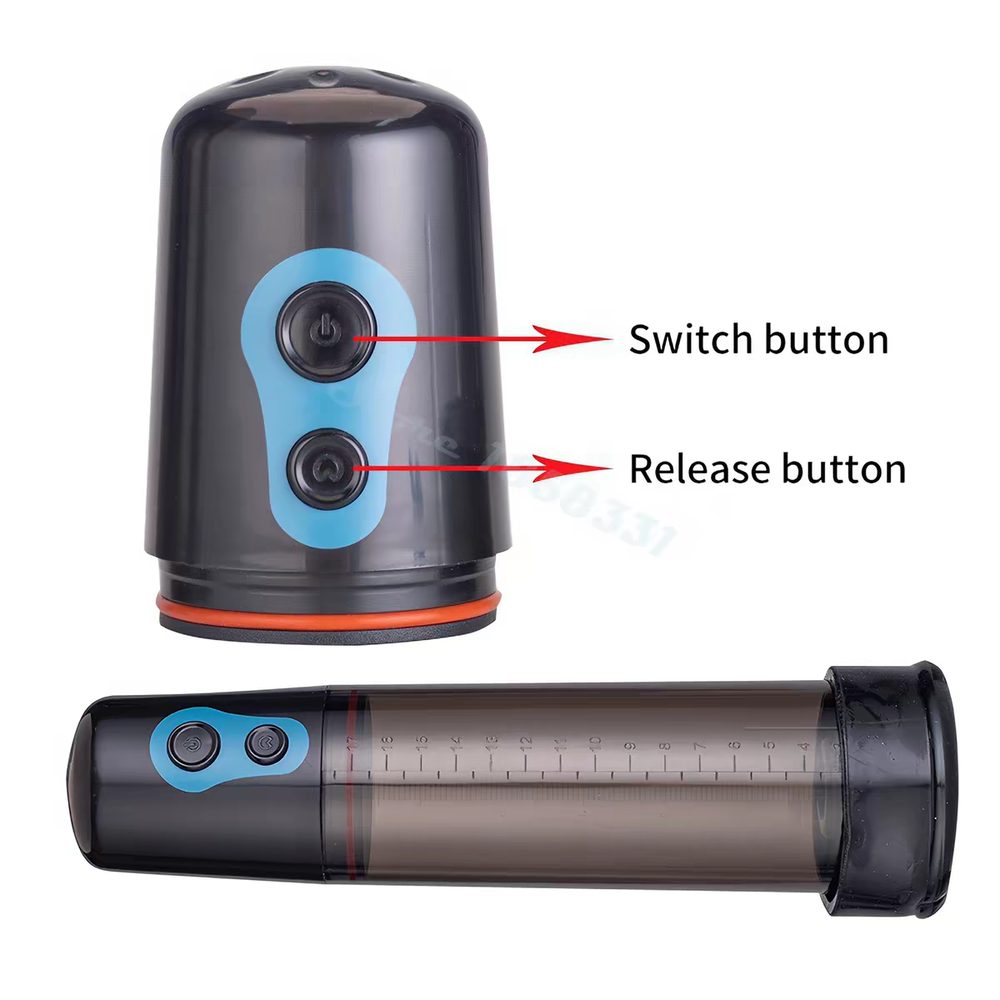
TL;DR: A penis pump works by drawing air out of a sealed cylinder, which lowers the pressure around the penis and pulls blood into it. Two things decide whether it's safe: the pressure, which should never be painful, and the session length, which should stay short. Discomfort, numbness or discolouration mean stop immediately. This guide covers the mechanics, the two limits, and when to ask a doctor instead. This is an educational guide about using a product. It is not medical advice, it makes no claim about treating any condition, and it is not a substitute for seeing a doctor. The two numbers that matter Everything else in this guide is detail. These two decide whether a session is safe:The number Safe approach WhyPressure Only as much as feels like gentle suction. Never painful. Pain is the signal that tissue is being stressed. Numbing yourself to it removes your only warning.Session length Short — a few minutes at a time, with breaks Tissue needs circulation. Long unbroken sessions are where most problems start.The rule that covers both: if it hurts, if anything goes numb, or if the colour changes, stop and release the pressure. Those three signs are not "a bit much" — they're the body saying the limit was already passed. This is why a gauge matters more than it sounds: without one you are judging pressure by feel alone, and feel is exactly what your body stops reporting reliably once something is wrong. The vacuum pump with a graduated scale is the type that shows a reading you can watch and stop at, rather than a tube you squeeze until it feels like enough. How a pump actually works A pump is a cylinder that seals against the body, plus a mechanism for removing air from inside it.The cylinder creates the sealed space. It has to fit well enough to hold a vacuum — too wide and it won't seal, too narrow and it's uncomfortable at the base. The pump mechanism — usually a hand bulb or a trigger grip — draws air out. The valve releases the pressure. Every pump has one, and it is the part you need to be able to reach instantly during a session. The gauge, on models that have one, shows how much vacuum is being applied. This is why a graduated or scaled model is easier to use carefully: without a gauge, you're judging by feel alone.Why a gauge matters: it turns "that feels like enough" into a number you can keep the same or lower next time. Most injuries from pumps come from more pressure than intended, not less. What the cylinder is actually doing to tissue The mechanism is worth understanding because it explains every rule that follows. Removing air from a sealed cylinder lowers the pressure inside relative to the body. Blood flows toward the lower-pressure area, so the tissue inside the cylinder engorges. That is the entire effect: a pressure differential causing temporary vascular congestion. Nothing is stretched permanently, and no tissue is "trained". Three consequences follow directly from that mechanism. The effect is bounded by circulation, not by pressure. Once the tissue is engorged, more vacuum does not produce more of anything — it produces pressure on the same tissue. This is why the sensation plateaus and why continuing past that point adds risk rather than result. The tissue cannot report damage while it is happening. Under vacuum, nerve signalling in the area becomes less reliable. Numbness is a late symptom, not an early warning, which is why "stop before it feels like much" is a rule rather than a preference. Recovery time is vascular, not muscular. The soreness afterwards comes from capillaries that have been distended. They recover on a scale of hours to a day, not minutes, which is why back-to-back sessions compound rather than accumulate benefit. Understanding that sequence is what makes the practical limits — short sessions, low pressure, rest between uses — look like the method rather than the paperwork. Doing it properly, from set-up to finish Before you startLearn where the release valve is and how it feels to open it, before the pump is anywhere near your body. Do this with the cylinder empty. Check the seal. The base of the cylinder needs to sit against the body with no gaps. A little water-based lubricant around the rim helps it seal. Trim any hair at the seal line. It's the most common reason a pump won't hold pressure. Pick somewhere you can stop immediately and won't be interrupted. Set a timer for a short session. "A few more minutes" is exactly how sessions run long.The session itselfApply lubricant to the base of the cylinder, and to yourself. This helps the seal and reduces friction at the rim. Place the cylinder so it sits comfortably, with the base flat against the body. Create the seal by holding it in place. Pump slowly. One squeeze, then pause. Feel what changed before adding more. Stop well before it feels tight. The right amount is less than you expect. If you're using a gauge, note the reading and stay at or below it next time. Hold briefly, then release. A short hold with the valve opened is the whole session. Open the valve before removing anything. Releasing the pressure first is what makes removal comfortable. Rest between sessions. Tissue needs time between uses; back-to-back sessions are the fastest route to soreness.How long, and how much pressure The honest answer to both questions is "less than the internet says", but vague advice is what sends people looking in the first place, so here is what the practical guidance converges on. Session length. Short holds, not long ones. The commonly cited starting point is five to ten minutes per session, with the pressure released and re-applied rather than held continuously. Nothing about a longer session produces a better result — the effect is vascular and it plateaus quickly. If you are going past fifteen minutes because it still feels like something is happening, what is happening is tissue stress. Pressure. Pumps sold for personal use either have a gauge or they do not. If yours does, stay at the low end of what the gauge shows and treat any discomfort as a ceiling, not a target. If it does not — and most inexpensive cylinders do not — the rule is a physical sensation rather than a number: you should feel a gentle pull, never a stretch or a throb. A pump that requires real effort to squeeze is telling you the seal is already at the limit. Frequency. Not daily. The tissue needs to recover between sessions, and the people who run into trouble are almost always the ones who used it repeatedly in one sitting rather than the ones who used it once carefully. The four things people get wrong These come up repeatedly enough to be worth naming before the safety section. Chasing the pressure. Pumping until it is uncomfortable, because the "full" feeling is the point being sought. The sensation peaks early; everything after that is cumulative strain on tissue that cannot signal damage clearly while it is happening. Skipping the release. Holding pressure for a long block instead of short cycles. Releasing is not a formality at the end — it is part of the method, because it lets circulation recover between draws. Ignoring the base. A cylinder that does not seal properly at the base does not just work badly, it concentrates pressure at the rim. Poor seal plus high effort equals a ring of bruising that appears the next day. Treating it as a measurement. Using the pump to establish "how big it actually is". The size under vacuum is not a meaningful figure — it is a temporary state produced by pressure, and comparing it to anything else is comparing two different conditions. What to expect — and what it isn't What a session does: temporarily draws blood into the area, which makes it look fuller for a short time. What it doesn't do: it doesn't create a permanent change, and a single session's effect fades within a short while. Anyone selling a pump on the promise of a lasting result is overstating it — that's a claim about a medical outcome, and a pump isn't a treatment. This matters for choosing one: buy a pump for how it feels to use, not for a promised result it can't deliver. Stop immediately ifSignal What to doSharp or persistent pain Open the valve, stopNumbness, tingling or loss of sensation Open the valve, stopDiscolouration — blue, purple, or blotchy Open the valve, stopBlisters, bruising or broken skin Stop, and let it heal fully before any further useDizziness or feeling faint Open the valve, lie down, stopThe pressure won't release Stop and address the valve before anything elseIf a symptom doesn't settle quickly, or comes back, that's a question for a doctor rather than for a product guide. What "doesn't settle quickly" means in practice Vagueness here is what makes people either panic unnecessarily or wait too long, so it is worth being specific about which symptoms are ordinary and which are not. Ordinary, and expected to pass within minutes of releasing pressure: a temporary feeling of fullness, slight redness at the seal line, and a brief sensitivity afterwards. These are the direct consequence of what the device does and they resolve on their own. Expected to pass within a day, but worth not repeating: a ring of mild bruising at the base, or a dull ache that fades over hours. This usually means the seal was poor or the session ran long. It is not an emergency, but it is the device telling you the session was over the limit — repeat it and the next one will be worse. Not ordinary, and a reason to stop using it and speak to a clinician: blistering or broken skin, numbness that has not fully returned within an hour or two, discolouration that persists after pressure is released, any sharp pain during rather than after, or a return of the same symptom on a subsequent session at lower pressure. The last one matters most. A symptom that appears at the same point every time, no matter how careful you are, is not a technique problem — it is a signal that something about your anatomy or circulation does not suit this device, and no adjustment to the routine will change that. The claims you will see, and what they are worth Search for a pump and you will find three claims repeated. It is worth knowing where each one stands, because two of them are not supported and one is true only in a narrow sense. "It increases size permanently." This is the claim that sells pumps and it is not supported. The visible change is a temporary vascular effect that resolves within hours. Nothing about vacuum pressure causes lasting tissue growth, and any product marketed on this promise is overstating what the device does — a claim about a medical outcome that a consumer product cannot deliver. "Doctors use it for erectile dysfunction." This one has a real basis. Vacuum therapy is a recognised clinical option, typically prescribed and fitted by a clinician for specific patients, and it is used alongside a constriction ring under medical supervision. The gap between that and a consumer pump used recreationally is the fitting, the supervision, and the assessment of whether it is appropriate for you at all. A clinical device being real does not make a random cylinder equivalent to it. "It helps with stamina or training." No meaningful evidence base. It is not harmful as a claim, but it is a benefit that has not been demonstrated, and treating an unproven benefit as a reason to use it more often is how sessions get longer than they should. The practical conclusion: buy a pump for what it does in the moment, if that is something you want. Do not buy one as a treatment, and do not use it to pursue an outcome it cannot produce — that is exactly the mindset that leads to longer sessions and higher pressure, which is where the risk actually lives. ⚠️ When not to use one Skip it and speak to a doctor instead if any of these apply:You have a bleeding disorder, or you take blood-thinning medication. You have a condition affecting the area, or you're recovering from surgery or an injury there. You're experiencing pain that hasn't been assessed. You're concerned about sexual function or fertility — that's a medical conversation with a real clinician, not a product decision.None of those are reasons to be embarrassed about asking. They're ordinary reasons to get an ordinary answer from someone qualified to give it. Cleaning and storageWash the cylinder with warm water and mild soap after each use, and dry it fully — inside as well as out. Clean the valve and any tubing according to the manufacturer's instructions. This is the part people skip, and it's the part that degrades first. Store it disassembled and dry. A cylinder stored sealed and damp is where odours come from. Don't share it without cleaning it properly between users — it's a body-contact product like any other.Our cleaning guide covers the material-by-material routine, and the materials guide explains why non-porous surfaces clean fully and porous ones don't. The parts that degrade first A pump has more failure points than a dildo, and they fail in a predictable order. The seal ring or sleeve goes first. It is the softest component and the one in constant contact with lubricant, which is why silicone-based lubricant will shorten its life dramatically — it degrades silicone rubber. Use water-based lubricant even if the cylinder itself is silicone. Our lubricant guide covers which base suits which material, and which combinations you should avoid entirely. The valve is second. Residue collects in the mechanism, and a valve that sticks is a valve that does not release when you need it to. Flush it with warm water after each session rather than waiting for a visible problem. The tubing, on models that have it, is where mould appears if it is stored wet. Detach it, drain it, and hang it to dry rather than coiling it damp. The gauge, where fitted, is sealed and not user-serviceable. If a reading stops returning to zero when released, the gauge has failed and you no longer have the information the whole method depends on — replace it rather than continuing to guess. A cylinder that has developed a crack or a cloudy, pitted interior should be replaced. Cloudiness in clear plastic is the material degrading, and a degraded surface does not clean fully; the same applies to a seal ring that has gone tacky or lost its shape. Storage that does not cost you a replacement Store it disassembled and dry, in something that lets air move. A sealed bag traps residual moisture against the seal ring, which is precisely the component you least want sitting wet. Keep it away from other silicone items if the seal is silicone — silicone against silicone can bond over time and leave a tacky, degraded surface on both. A cloth bag or a hard case with the parts separated solves this without effort. Sources and further readingErectile dysfunction — MedlinePlus, US National Library of Medicine — the clinical picture of erection problems, and why a pump is a device rather than a treatment. Penis pump — MedlinePlus medical device information — what a vacuum device is indicated for and the safety limits clinicians describe. Penile erection — MedlinePlus medical encyclopedia — how blood flow produces an erection, which is the mechanism the pump borrows. Pain — MedlinePlus — the general principle that pain is a stop signal, not a threshold to push past.Key takeawaysA pump changes blood flow temporarily; it does not produce a permanent change in size, and no device does. Pressure should never reach the point of pain. Discomfort, numbness or discolouration are stop signals, not a stage to work through. Keep sessions short. The two numbers that matter are pressure and time, and both have a low ceiling. A pump is not a treatment for erectile dysfunction. If erections are a persistent concern, that is a conversation with a doctor. Skip it entirely if you have a bleeding disorder, are on blood thinners, or have a condition affecting the penis — ask a clinician first.Frequently asked questions How much pressure is safe? Only as much as feels like gentle suction, and never enough to hurt. If your pump has a gauge, pick a reading that's comfortable and stay at or below it. Pain, numbness or discolouration mean the limit was already passed — release the pressure. How long should a session be? Short, with breaks, and shorter than you'd guess. Set a timer rather than judging by feel — "a few more minutes" is how sessions run long. Does it give permanent results? No. A session temporarily draws blood into the area and the effect fades. Anyone promising a lasting change is making a medical claim a pump can't support. What if the pressure won't release? That's the situation to stop and solve before anything else — check the valve. Every pump has a release mechanism, and knowing how to work it is the first thing to learn. Can I use it if I'm on medication? Ask a doctor. Blood-thinning medication and bleeding disorders in particular are reasons not to use one without medical advice. Do I need lubricant? A little water-based lubricant around the rim helps the seal and reduces friction. It's also the only type safe with a condom. Why does my pump keep losing pressure? Usually the seal — hair at the rim, a gap at the base, or a cylinder that's too wide. Trimming and repositioning fixes most of it. Should I use it with a condom? If you're sharing it, yes, and clean it between users regardless. It's a body-contact product, so the cleaning rules are the same as any other. What size cylinder do I need? One that seals at the base without pressing anywhere. Measure your erect girth and pick a cylinder comfortably wider than that — too narrow concentrates pressure at the rim, which is where bruising comes from. Too wide simply fails to seal, and a cylinder that will not hold vacuum is the most common reason a first attempt does not work at all. How often is too often? There is no published daily allowance, but the useful rule is about recovery rather than frequency: if the previous session left any bruising, ache or numbness, wait until it has fully gone before using it again. People who run into problems are usually the ones who used it several times in one sitting, not the ones who used it once a week. Can it make things worse over time? Not through normal careful use, but the two mechanisms that cause trouble are both about overdoing it rather than the device itself: sustained high pressure, and repeated sessions without recovery. Both are self-inflicted and both are avoidable, which is why the pressure and time limits in this guide matter more than the model you choose. Does it work if I have erectile difficulties? That is a question for a clinician, not a product guide, and the honest answer is that vacuum therapy is a real clinical option that requires assessment first. Using a consumer pump as a self-treatment for a medical concern skips exactly the step — a professional assessment of whether it is appropriate for you — that makes the clinical version safe. The bottom line Two limits decide everything: pressure that never hurts, and sessions that stay short. A model with a gauge makes the first one easier to hold to, and a timer makes the second one automatic. Anything that hurts, numbs or discolours means stop — that's the whole safety system, and it is a genuinely simple one to follow. The pattern behind every mistake in this guide is the same one: treating a device that produces a temporary effect as if it were a treatment for a permanent goal. People do not get hurt by using a pump carefully. They get hurt by using it longer, harder and more often in pursuit of something it was never going to deliver. Use it for what it does in the moment, give the tissue time between sessions, and the risk stays where it belongs — small enough to be managed by paying attention. If privacy is the part you're unsure about, how discreet delivery works in the UAE walks through the box, the billing line and the courier handover — and the complete buying guide covers how to compare any listing before you order.

Can You Bring an Intimate Product Through Dubai Airport?

Can You Bring an Intimate Product Through Dubai Airport?

TL;DR: Dubai Customs' Passenger Customs Guide says arriving passengers must declare goods valued above AED 3,000. The same guide lists what it explicitly refuses — indecent and obscene materials, narcotics, counterfeit goods — and personal-use items are not on that list. What it also says is that exemption depends on the goods being "of a personal nature and not in commercial quantities". Separately, the rechargeable part of a rechargeable toy is a lithium battery, and spare lithium batteries are not allowed in checked baggage. Most of what circulates online about this is either folklore or a scare story written by someone selling something. The useful version is shorter than people expect, and it comes down to three questions: what you are carrying, how much of it, and where in the bag the battery is. The three things that actually get checked At Dubai airport the customs zone starts right after passport control and runs until you leave the customs gates. The guide is blunt that there is no clever way through it: "Verbal, written or electronic declaration or passage through the green or red channels will be regarded as a customs declaration by the passenger." Walking through the green channel is itself a statement that you have nothing to declare. So the decision is about three questions, not one. One: value. Goods whose value exceeds AED 3,000 have to be declared. This is the only number in the whole exercise that is written down, and it works the same way for a camera, a watch or a bag full of purchases. Two: quantity. The exemption assumes personal use. A single item for yourself reads one way on a scanner and in conversation; six identical ones read another way entirely, and the guide's language about commercial quantities is where that ends. Three: the battery. A rechargeable toy is a device with a lithium cell inside. That is a flight-safety matter handled by the airline and airport security long before customs, and it has its own rule — see below. Everything else you will read about this topic is commentary on those three. What Dubai Customs actually lists as refused The guide's section on items not allowed for import by passengers is short. It is worth reading in full because its omissions are as informative as its contents:Indecent and obscene materials of all kinds Gambling tools and machines Narcotics of all kinds Nasvaar and betel leaves (paan) of any kind Counterfeit goods of all kinds Counterfeit money Any other goods whose importation is banned under UAE law or the GCC Common Customs LawIntimate products do not appear. Neither does anything resembling them. The arbitrary annex of "restricting authorities" that follows the passage divides the regulated world by function — medicines and medical equipment to the Ministry of Health, telecommunication equipment to the TDRA, wireless devices, drones, cosmetics for exhibition — and none of those categories describes a silicone object with a motor in it. This is the most honest thing that can be said, and it is worth stating precisely: the guide does not address personal-use intimate products by name, either to permit or to restrict them. Anyone who tells you it does is inventing a passage. The reasonable reading of an unaddressed category in a document that lists its refusals item by item is that the item is not on the refusal list. The phrase that does the work is "indecent and obscene materials of all kinds". It is a phrase about content, not about objects. A printed or recorded item depicting explicit material is one thing. A physical product carried in luggage is a different thing. That distinction is the same one underneath the wider legal question about owning these products in the UAE, which is worth reading alongside this article if the legality angle is what brought you here. Why the "personal use" wording matters more than the threshold The AED 3,000 figure is a value test with a comfortable margin — almost no single personal item reaches it. The test that is harder to satisfy at a glance is the qualitative one, and it appears twice in the guide. The exemption conditions require that baggage and gifts be of a personal nature and not in commercial quantities, that the passenger not be someone who regularly trades in the items they carry, and that they not be a crew member or airport ground host. Excess quantities intended for commercial purposes are then processed exactly like an import: tariff, valuation, declaration, the full procedure. In practice the practical question a reader is asking is "one for me, is that fine?" That is the case the exemption is written around. The case it is not written around is the one where the bag contains a set of them, still boxed, in different colours — which looks like stock, and is treated as stock. Check-in or carry-on: the rule people miss This is the part of the topic that has nothing to do with customs and everything to do with the aircraft, and it is the part most guides get wrong. Lithium cells travel under aviation rules set by IATA, and the rule that catches people is simple: spare lithium batteries are not allowed in checked baggage. IATA's own guidance puts it directly — batteries may be carried by air depending on configuration and watt-hour rating, and spare batteries are not permitted in checked luggage. The confusing part is that a toy with a sealed, built-in rechargeable cell is not the same thing as a loose power bank rattling around in a pocket. Watt-hour rating is what decides the category, and a typical toy-sized cell is far below the limits that require airline approval. But the general principle — cells and batteries belong with you, in the cabin — is the one to plan around, because it is the rule that an airport officer is actually applying when they ask you to open a bag. Three practical consequences:A rechargeable toy goes in your hand luggage, in the cabin with you, not in the hold. A battery-free toy has no such constraint — it can go anywhere, which is why manual toys are the simpler choice for a trip. If you are carrying a separate power bank for your phone anyway, the same rule already applies to it, and most travellers already know it.The drain-your-battery trick There is advice circulating that a toy turned on at the security checkpoint proves it is not a detonator. That is nonsense, and following it produces the one outcome nobody wants: a vibrating object in an open bag at a crowded screening lane. What actually happens is quieter. A lithium cell in a sealed device is X-rayed as a cell, the same as a laptop, a phone or a camera. Nothing is switched on to prove anything. The decision table Find your situation and take the row. This is deliberately short — there are only four situations that change the answer.Your situation Where it goes What to expectOne item, battery-free, personal use, under AED 3,000 Checked or cabin — your choice Green channel; nothing to declareOne item, rechargeable, personal use Cabin only (lithium cell) Green channel; X-ray sees a device batterySeveral identical items, still boxed Declare it Treated as commercial quantity — full import procedureAnything over AED 3,000 in value Declare it AED 3,000 threshold applies to goods, whatever they areThe two rows that cause real trouble are the third and the fourth, and both are about the same instinct: assuming that because the item is personal, the quantity and the value are also automatically personal. The threshold and the commercial-quantity test apply to everything in the bag. What "several" means in practice The guide does not define commercial quantity, which is the honest answer and also the unhelpful one. What the wording points at is intent: a set of items that obviously belongs to one person versus a set that looks like it belongs to a shipment. A practical way to think about it: if the items would look normal laid out on a bathroom shelf, they read as personal. If they look normal laid out on a shop counter, they read as stock. That is not a legal test, but it is close to the judgement being made. What the airport actually sees Two separate systems are looking at your luggage, and conflating them is what makes this feel more mysterious than it is. Security screening at the checkpoint is looking for threats: weapons, explosives, prohibited substances. Its interest in your bag is safety. It is the system that cares about the battery. Customs at the green and red channels is looking for undeclared value and restricted goods. Its interest in your bag is duty and compliance. It is the system that cares about the AED 3,000 and the commercial-quantity test, and it is the system the Passenger Guide is written about. Neither system is running a search for the presence of an intimate product. Understanding that the two are separate makes the whole thing less intimidating and, more usefully, tells you which rule applies to which part of the bag. The green channel is a declaration This is the one detail people underestimate. The guide states explicitly that passage through the green or red channel is itself regarded as a customs declaration. Choosing green is not "keeping quiet" — it is telling customs, formally, that you have nothing above the threshold and nothing in commercial quantities. That is why the framing matters. If you have something above the threshold and walk green, you have made a false declaration, and the guide's schedule of penalties includes a fine for wrong declaration. If instead you walk red and declare, you are doing the thing the channel exists for. Declaring is not an admission of doing anything wrong; it is the ordinary procedure for goods above the threshold. If it goes wrong Three things can happen, in ascending order of annoyance, and it helps to know which is which. A question at the gate. The most common outcome is a short conversation. Bags can be opened and repacked; nothing is seized unless something is actually wrong. A detain slip. For items that need an authority's approval — medicines are the example the guide uses — customs can detain the item and issue a slip, which is then resolved with the relevant ministry. The guide notes this path explicitly for medicines, which is why reading about medicines gives a misleading sense of how items are generally handled. Appeal. The guide describes a formal appeals procedure for customs decisions, including disputes over restricted and prohibited goods, with documentation of the decision and a justification letter. The existence of that route tells you the system treats decisions as reviewable rather than final. What the guide does not describe is a routine seizure of personal-use items from arriving passengers. If that were the standard outcome, the appeals section would not be framed the way it is. The alternative that skips all of this There is one way to avoid the entire subject, and it is not a loophole: buy from a UAE seller and have it delivered domestically. A parcel that originates inside the country is a domestic delivery. It does not arrive at an airport, it does not pass a customs point, and none of the rules on this page apply to it. That is a factual difference in how the goods move, not a legal trick, and it is the same difference that makes domestic ordering the simpler path in the general question of buying these products in the UAE. What it does not do is let you carry something on a plane — if the plan is to pack a toy for a trip, the rules above still apply, but to a product you already own rather than to an arrival. If discretion is the actual concern rather than legality, how private delivery works here covers the packaging and delivery side, which is a different problem with a different answer. Choosing something that travels well If the trip is the reason you are reading this, travelling with the right object is easier than travelling with the wrong one. Two properties matter: no battery, and no girth that makes the bag hard to close. Battery-free means one fewer rule. A manual product has no lithium cell, so it can go in the hold, and nothing about the security checkpoint changes. In our own catalogue the manual options run from a realistic vaginal onahole to a liquid silicone suction-cup dildo — the listings state "manual, battery-free" or "no motor, no batteries" where that is the case, which makes them easy to spot. A removable sleeve travels better than a whole device. Where a motorised product has a detachable liner, the liner is what needs cleaning and drying, and it packs flat. For the rechargeable side of the catalogue — where the cell is built in and the cabin rule applies — the vibrator category lists what each model uses. Either way, the guide to storing and caring for products is the one to read before a suitcase goes back into a cupboard for months. SourcesPassenger Customs Guide, Version 6 — Dubai Customs, 2025 — the AED 3,000 declaration threshold, the conditions for duty exemption (personal nature, not commercial quantities), the green/red channel as a declaration, and the list of items not allowed for import by passengers. Customs Information — Passenger Guide — Dubai Customs' landing page for the passenger guide, and the gateway to the PDF above. Permitted Luggage & Items — the duty-exemption conditions stated in full: personal nature, not commercial quantities, and not a frequent trader in the goods. Batteries — IATA, Dangerous Goods Regulations programme — cells and batteries may be carried by air depending on configuration and watt-hour rating; spare batteries are not allowed in checked baggage.Key takeawaysDubai Customs requires arriving passengers to declare goods valued above AED 3,000; personal belongings below that figure need no declaration. The Passenger Customs Guide's list of items not allowed for import does not include personal-use intimate products — the guide neither names nor restricts them. The exemption is conditional on the goods being of a personal nature and not in commercial quantities; several identical boxed items read as stock. Walking through the green channel is itself a formal customs declaration, not a way of staying quiet. Rechargeable means a lithium cell: spare batteries are barred from checked baggage under IATA rules, so a rechargeable toy travels in the cabin. A battery-free product has no battery rule to satisfy at all, which makes it the simplest thing to pack.Frequently asked questions Can I bring a sex toy into Dubai in my suitcase? Personal-use items are not on Dubai Customs' list of goods that passengers may not import. The two conditions that decide the case are value — declare above AED 3,000 — and quantity, since the exemption assumes personal rather than commercial quantities. Do I have to declare it? Not on its own. The declaration requirement in the Passenger Customs Guide is a value threshold of AED 3,000 for goods. If what you are carrying is worth less than that and is for personal use, there is nothing to declare. Should it go in hand luggage or checked baggage? If it is rechargeable, the cell should travel with you in the cabin, because spare lithium batteries are not allowed in checked baggage under IATA rules. If it is battery-free, either is fine. Will security officers see it on the X-ray? The X-ray shows shapes and materials. What it is looking for is a threat, not a category of personal item, and the same scan that sees a phone or a camera sees a toy — with a battery inside it, a battery is what stands out. What happens if customs stops me? The usual outcome is a conversation and, sometimes, the bag being opened. Items that need another authority's approval can be detained with a slip and resolved through that authority; customs decisions can also be appealed. The guide describes both procedures. Is it different for a transit passenger? Transit passengers who stay airside do not pass through Dubai Customs at all. The customs rules on this page apply when you arrive and enter the country. If you clear immigration and leave the airport, you are an arriving passenger for that period. Does my visa status change the customs rules? The customs guide is written for passengers generally, not by residency status. What changes with residency is that a resident has a simpler alternative: ordering domestically, so the goods never cross a border at all. Are there items that look similar but are treated differently? Content is treated differently from objects. The guide refuses "indecent and obscene materials of all kinds", which is a category about what is printed, recorded or displayed, not about a product carried in a bag. That distinction is the one that matters if your luggage also contains media. What about a toy I bought abroad and am bringing home? It is the same test as any other purchase: value against the AED 3,000 threshold, quantity against the personal-use assumption. The customs value is what you paid, which is also why a receipt in the bag is more useful than a memory of the price. Does this article apply to Dubai only? The guide cited here is Dubai Customs' own, and the rules it describes apply at Dubai's airports. The GCC Common Customs Law is referenced within it, and other emirates run their own customs administrations, so the general shape is shared but Dubai is the specific case this page is written about. The bottom line Three questions decide it: how much it is worth, how many of them there are, and whether there is a battery. The value threshold is AED 3,000, the quantity expectation is personal use, and the battery belongs in the cabin with you. Everything beyond that is the internet's contribution, not the customs guide's. If the trip is not the point and the question was really about ordering at all, the answer is simpler: start with the buying guide, and the parcel never reaches an airport.

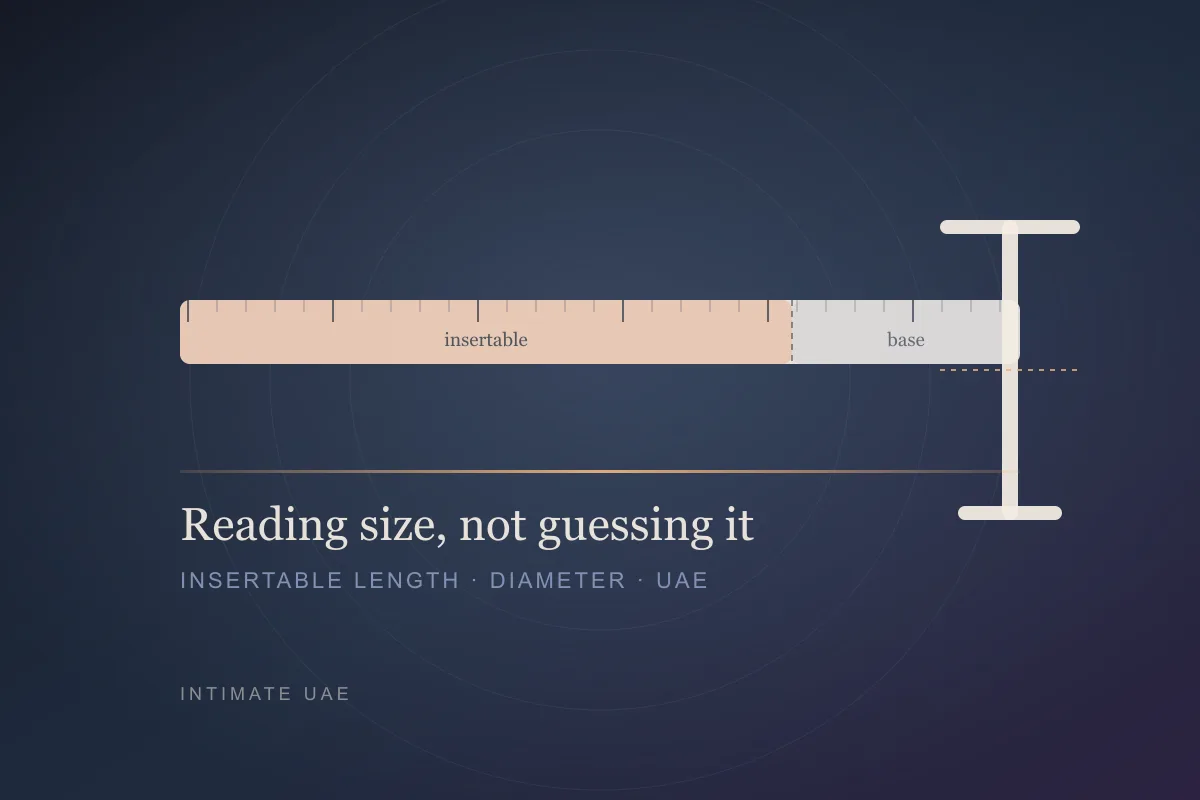
Sex Toy Sizes in the UAE: How to Read Insertable Length and Diameter

Sex Toy Sizes in the UAE: How to Read Insertable Length and Diameter

TL;DR: A 2015 study of the sizes listed by eight retailers found most vibrators and dildos sold for vaginal or anal insertion sit between 4 and 6 in (roughly 10–15 cm) of length with a 4–5 in (10–12.7 cm) circumference — around the same dimensions as the average erect penis. In practice, two numbers on a listing decide whether a toy suits you: insertable length, which is not the same as total length, and diameter, which is what girth actually feels like. This guide shows you where to find both, how to convert them without arithmetic, and when the smaller option is the better buy. The two numbers, and why they get confused Most listings give you a size. Very few tell you which size they mean. Three different measurements get published as "length":Total length — tip to the base of the toy, or tip to the end of the handle. This is the number most often printed in a product title. Insertable length — the part that actually goes in, stopping where the shaft meets the base, the testicles, the suction cup or the motor housing. Usable depth — for a male masturbator, the internal channel, which is usually shorter than the case.The gap between total and insertable is not small. In the products we stock it runs from about 2 cm on a dildo to about 5 cm on a large one — enough to turn "18 cm" into 16 cm in use, or to make a 23 cm dildo feel like a 17 cm one. That is why a toy bought on the headline number often arrives feeling bigger or smaller than expected. Diameter is the other half, and it is the one people underestimate. A 1 cm jump in diameter is a much bigger change in sensation than a 1 cm jump in length, because circumference scales with it and the tissue responds to girth. If you only check one figure, check this one. The conversion that stops the arithmetic Listings mix centimetres, millimetres and inches, sometimes in the same listing. Two shortcuts cover almost everything:You want From inches From centimetresDiameter Multiply circumference by 0.318 Divide circumference by 3.14Circumference Multiply diameter by 3.14 Multiply diameter by 3.14Or use the pairs directly: a 30 mm diameter is about 9.4 cm around; 35 mm is about 11 cm; 40 mm is about 12.6 cm; 45 mm is about 14.1 cm. The jump from 35 mm to 45 mm looks like a centimetre on paper and feels like a different category in use, especially for anal play where the same diameter is a bigger ask. Reading a listing that mixes units The awkward cases are the ones where a listing gives circumference in one unit and diameter in another. Two worked examples cover most of them. A toy sold as "1.5 inch diameter" is 38 mm — or, multiplied by 3.14, about 12 cm circumference. A toy sold as "12 cm circumference" is divided by 3.14 to give a 38 mm diameter. Those two are the same toy described two ways, and they are the most common pair you will see. A toy sold as "5 inch insertable" is 12.7 cm. If the same listing says "6 inch total", the difference is 2.5 cm of base or handle — which matches what we see in our own catalogue, where the gap between total and insertable runs 2 to 5 cm. Why "one size up" is not a fixed step The phrase suggests a standard increment. There isn't one. In the catalogue we stock, the step between adjacent sizes in the same range is often 4–5 mm of diameter, but between one range and another it can be 10 mm or more, because different manufacturers grade their products differently. That matters when you are moving up. "The next size" in a range you already own is a smaller jump than "the next size" in a different range — check the specification rather than the label. A 5 mm change is usually comfortable; a 10 mm change is worth planning for over two purchases. The measurements that are not on the listing at all Three things affect fit and are almost never published: Base width, which matters more than shaft width for any anal use — a flared base has to be wider than the widest point of the shaft, or the safety feature is decorative. Neck diameter, the narrowest point below the widest part. A plug with a wide body and a wide neck will not stay seated comfortably; the neck is why "stays in place without being held" works at all. Wall thickness on hollow or sleeve toys, which decides how much the toy compresses. Two toys listed at 40 mm can feel like different sizes if one has a 3 mm wall and the other 8 mm. Which size to start with This is a decision table, not a parameter list. Find your situation, take the row.Your situation What to look for Real exampleFirst insertable toy 10–14 cm insertable, 30–35 mm diameter 14 cm insertable suction-cup dildoComfortable with a small toy, want more Add 2–3 cm length before adding girth 16 cm insertable from an 18 cm dildoAnal use of any kind Short insertable length, flared base, 30–36 mm to start 13–15 cm insertable with a wide flared baseSharing with a partner Stay under 15 cm insertable, under 40 mm diameter 15–17 cm insertable rangeWanting a "fuller" feel Same length, +5 mm diameter 45 mm head width on a 17 cm insertableMale masturbator sizing Channel depth, not case length 13–15 cm internal channelThe rule behind the table: change one dimension at a time. Going longer and thicker in a single purchase gives you no way of knowing which change was too much. If you are already comfortable at 12 cm and 32 mm, the next sensible step is 14 cm at 32 mm, then 14 cm at 36 mm. It sounds slow; it costs far less than a drawer of toys you don't use. Why the first purchase is the one people get wrong People overwhelmingly buy too big on the first purchase, and there are two concrete reasons rather than a vague "overestimating". The first is that the number they compare against is a total length, because that is what the title says. Buying "18 cm" and expecting 18 cm of insertable length is a 2–5 cm error in the direction of more, not less. The second is that the reference point people reach for is the larger of the two numbers they half-remember from the research: 15 cm length rather than the 13.12 cm mean. The gap between "what I think average is" and "what average is" is small on paper and large in the body. A third factor is quieter: a toy bought for solo use is often chosen as if it will also be used with a partner, and the compromise pushes upward. If the use case is genuinely solo, buy for solo. If you already own something that feels wrong Before buying again, work out which dimension is actually the problem. It is usually one, and identifying it saves the next purchase. Too long but fine in girth — you are stopping before the base, and the toy is doing nothing the shorter version would not. Look for shorter insertable length at the same diameter. Shorter insertion depth at the same width is typically the low-cost end of any range, and it is the most common fix. Fine in length but uncomfortable on entry — that is diameter, and usually the point of entry rather than the widest part. A more tapered tip at the same maximum diameter is a different experience entirely. Fine going in, uncomfortable in use — often not size at all. Too little lubricant, a firmer material than expected, or an angle the toy was not designed for. Worth ruling out before spending. Fits but does not stay put — neck diameter, not body diameter. A plug with a narrow neck and a wide body stays seated; one with a wide neck does not, at any body size. The general pattern: people replace toys when they should replace a dimension. The catalogue rewards knowing which one. What the research actually says about "normal" Two studies are worth knowing because they set the baseline every listing is quietly compared against. An analysis of the dimensions listed by eight online retailers, published in the Journal of Sexual Medicine in 2015, found most insertable vibrators and dildos were sized between 4 and 6 in in length and 4 to 5 in in circumference, and concluded that the average product approximates mean penile dimensions. Two things follow. Most mainstream toys are built around one narrow band, and the toys that sit outside that band are the ones you have to look for — the genuinely small and the genuinely large are a minority of the catalogue. The second study is the systematic review by Veale and colleagues in BJU International (2015), which pooled measurements from up to 15,521 men to produce reference percentile charts. It found a mean erect length of 13.12 cm and a mean erect circumference of 11.66 cm. That second figure is useful as a check: an 11.66 cm circumference is a diameter of about 37 mm. If a toy's diameter sits well above that, it is above average girth, whatever the marketing copy implies. Neither study tells you what you will enjoy. They are useful for a different reason: they let you tell the difference between "this toy is unusually large" and "I am unusually small", and only the first one is anything you need to act on. What our own catalogue actually contains Everything above is about published research. Here is the same question answered from the other end: what do the dildos we sell actually measure? We went through every realistic dildo in our catalogue and pulled the stated dimensions. Sixteen products, and the spread is much wider than the research average suggests:Length (total) Products at that length13–15 cm Mini 13, Small 14, Red Glans 1516–18 cm Veined 17, Black 16, Heating Thrusting 18.221–23 cm Suction 21, Telescopic 21.5, Liquid Silicone 2329–33 cm Suction 29, Remote 29, XL 30, Large Suction 31, Double-Ended 3341 cm Soft TPE 41Total length runs 13 cm to 41 cm — a 3.2× spread. The median is 22 cm. That single comparison is the most useful thing in this article. The research says the average insertable dildo is around 10–15 cm. Our median total length is 22 cm. The gap between those figures is almost entirely explained by the two measurement problems described above: the catalogue is stocked around total length, and the median product is not the median usable depth. Where the numbers get thin, and why we say so Only six of the sixteen state an insertable length, and only three state a diameter. That is not an oversight in the article — it reflects what the listings give us:Stated Count ExamplesTotal length 16 / 16 all productsInsertable length 6 / 16 Lotus 17.5, Large Suction 18, Telescopic 16Diameter 3 / 16 Mini 38 mm, 21 cm 40 mm, Telescopic 40 mmIf you are buying on diameter — and the earlier section argues you should — you will have to ask for it on ten of these sixteen products. That is the practical reality of shopping this category, and it is worth knowing before you order rather than after. A note on one product in the table: the "Black Realistic Dildo – 16 cm" carries 16 cm in its title, which is the figure we use. Where a listing states one number and no breakdown, treating it as total length is the safer assumption, because that is what titles almost always mean. Size is not the only thing that decides comfort Three things change how a given size feels, and they are all worth more than a centimetre:Material softness. A soft, squeezable material at 40 mm feels very different from a rigid one at the same width. Liquid silicone dildos and TPE sleeves compress; a firm ABS shell does not. When you are between two sizes, the softer material is usually the gentler choice. Taper and tip shape. A tapered tip inserts far more easily than a blunt or pronounced one at the same maximum diameter. For anal use this matters more than diameter. Lubricant. Adequate water-based lubricant removes more discomfort than dropping a whole size step. If a toy is too much, the first thing to try is more lubricant, not a refund.Discomfort that persists despite all three is information, not a technique problem. MedlinePlus is a reasonable plain-language starting point for understanding where pain stops being something to push through, and persistent pain during penetration is a reason to speak to a doctor rather than to size down again. The same number is a different size in a different material This is the part that makes comparing listings genuinely difficult, and it is worth stating plainly: a 40 mm diameter in soft silicone and a 40 mm diameter in rigid ABS are not the same experience, and the number will not tell you so. Soft materials compress. A liquid silicone dildo at 40 mm can pass where a firm one at the same width will not, because the tissue meets a surface that gives. A TPE sleeve behaves similarly. A rigid shell — ABS, hard plastic, polished metal, glass — does not compress at all, so its listed diameter is the diameter you get. The practical consequence: when you are between two sizes, the softer material at the larger size is usually more forgiving than the firm material at the smaller one. That is counter-intuitive if you are buying on numbers, and it is the reason two toys that "should" be equivalent are not. Material also decides what the diameter means over time. Porous materials — TPE, TPR, jelly — can absorb lubricant and cleaning agents and degrade, and a degraded surface is not the surface you measured. Non-porous materials hold their dimensions. Our materials compatibility matrix lists which of our products use which, and our guide to silicone versus TPE covers the trade-offs in more detail. Vibration adds a dimension that is not on the listing A vibrating toy is not just a static shape with a motor inside. Two things change the effective size question: Motor housing occupies space. In a bullet or a small vibrator, the motor and battery take up room that would otherwise be shaft. Two toys listed at the same insertable length can have very different usable length once the housing is accounted for — which is why some listings specify "insertable length excluding motor" and most do not. Vibration changes tolerance. Many people who find a static toy of a given diameter uncomfortable find a vibrating toy of the same diameter comfortable, because the vibration changes how the tissue responds. It is not a trick and it is not universal, but it is common enough that "too big" is worth retesting with vibration before concluding it. If you are choosing between a static and a vibrating version of the same size, the vibrating one is the more forgiving choice for a first purchase, provided the power source suits you — our power sources page lists which products are rechargeable, battery or manual. What the listing is telling you, and what it isn't A few habits save a wasted order:Search the specification block, not the title. The title carries total length because it is the bigger number. The specification table is where insertable length and diameter usually live. Expect a stated range, not one value. Inflatable, telescoping and flexible toys change size in use. If a listing gives a range, take the top of it as your planning figure. Be sceptical of a single dimension. A masturbator advertised as "25 cm" is describing the case; its internal channel is often 10–15 cm. Check the base, not just the width. For any anal use, a flared base wider than the widest part of the shaft is the safety feature that matters more than the size itself.Our materials compatibility matrix shows which toys use soft versus firm materials, which is the fastest way to compare two similar sizes fairly. If you are still narrowing down what kind of toy you want, the complete UAE buying guide covers category by category first and sizing second — which is the right order. What you cannot check before ordering in the UAE Ordering from inside the UAE removes one problem and creates another. It removes customs uncertainty — the parcel ships domestically, so nothing is opened at a border and nothing is sized by a customs officer's opinion of what is appropriate. It creates a different issue: you cannot hold the product before it arrives, so the specification sheet is the only sizing information you get. Three practical points follow. Ask for the specification block before ordering. If a listing does not state insertable length and diameter separately, ask. A seller who stocks the product can usually measure it; a seller who cannot is worth being cautious about. Discreet delivery does not mean silent customer service. Returns rarely apply for hygiene reasons. Most intimate products cannot be returned once opened, which makes the pre-purchase check worth more than the after-purchase complaint. This is the argument for buying one step at a time rather than two. The plain box cuts both ways. The same discretion that stops anyone knowing what is inside also means nobody checks whether the right thing is inside. Open it and measure against the listing within the return window, if there is one — a mix-up discovered three weeks later is a mix-up you own. If sizing questions are part of a wider uncertainty about a first purchase, our guide to what to expect from a first toy covers the parts that are not about numbers at all. SourcesVibrators and other sex toys are commonly recommended to patients, but does size matter? Dimensions of commonly sold products — Herbenick et al., Journal of Sexual Medicine, 2015 — the 4–6 in length and 4–5 in circumference finding. Am I normal? A systematic review and construction of nomograms for flaccid and erect penis length and circumference in up to 15,521 men — Veale et al., BJU International, 2015 — mean erect length 13.12 cm, mean erect circumference 11.66 cm. Female genital self-image: a systematic review of predictive and associated factors — Journal of Sexual Medicine, 2026 — why size perception sits inside a wider picture than mechanics. Sexual health — MedlinePlus — plain-language starting point on sexual health topics. Pain — MedlinePlus — when discomfort is worth raising with a clinician.Key takeawaysMost vibrators and dildos sold for insertion fall between 4 and 6 in of length and 4 to 5 in of circumference. Insertable length is commonly 2 to 5 cm shorter than the total length in a product title — always read the specification block. Diameter matters more than length, because circumference scales with it and girth is what changes how a toy feels. The average erect circumference of 11.66 cm works out to a diameter of about 37 mm — a useful benchmark for judging whether a toy is large. When two sizes look close, choose the softer material and a tapered tip before choosing the smaller one. Change one dimension at a time; length first, then girth.Frequently asked questions Why does the size in the title differ from the specification? The title usually quotes total length because it is the larger number. The specification block gives insertable length and diameter, which are the two figures that decide fit. If a listing gives no insertable figure, treat the total as an upper bound, not a promise. Is 20 cm too big to start with? For most people, yes, and it is a difficult first purchase. Start in the 10–14 cm insertable range at 30–35 mm diameter, and move up in small steps. A toy bought too large tends to sit unused. What diameter should a beginner choose? Around 30–35 mm is a comfortable starting band for a first insertable toy. For anal use, begin at the lower end of that and go slowly, with plenty of water-based lubricant and a flared base. Does girth matter more than length? For most people, yes. Circumference changes sensation more noticeably than length, and it is the dimension that most often makes a comfortable toy uncomfortable. How do I measure a toy I already own? Measure the shaft from the tip to where the base begins for insertable length. For diameter, measure across the widest part of the shaft, not the head, and multiply by 3.14 for circumference. Are toys actually getting bigger? The mainstream range is narrower than the listings suggest. The 2015 retailer study found most products clustered between 4 and 6 in of length, with a few companies offering considerably larger models — the extremes exist, but they are not the norm. Can I use the size of a toy I already own as a reference? Yes, and it is the most reliable reference you have — provided you measure rather than remember. Measure insertable length by inserting a ruler to the point where the shaft meets the base, and measure diameter at the widest point rather than at the neck or tip. If the toy is flexible, measure it laid flat rather than stretched. Two cautions. A soft toy measured flat will read slightly wider than it feels in use, because it compresses; a firm toy will not. And if the toy is vibrating, the widest point may be the motor housing rather than the shaft, which is not the part that matters for insertion depth. With both numbers written down, comparing a new listing against your current toy takes about ten seconds — and it is the only comparison that reflects your own anatomy rather than an average. What if the diameter I want is not made? It usually is, but it may not be in the category you were looking at. The same diameter appears across vibrators, dildos and plugs, and the shape around it differs: a 35 mm plug is short and flared, a 35 mm dildo is long and straight. If a specific width matters more than the category, search by the number rather than by the product type — our power sources page and materials matrix both list dimensions alongside the other specifications, which lets you cross-reference across categories. The bottom line Read two numbers, not one: insertable length and diameter. Convert the second to circumference if you want to compare a listing against the average, and change one dimension at a time when you move up. Almost every sizing disappointment is a total length purchased as though it were an insertable one. If you want to see how the ranges line up side by side, the dildo comparison guide lists insertable length and diameter for each model we stock, and the materials guide explains why softness can matter more than a centimetre.

How to Use a Butt Plug Safely in the UAE: Sizing, Wear Time and What Goes Wrong

How to Use a Butt Plug Safely in the UAE: Sizing, Wear Time and What Goes Wrong

TL;DR: An anal plug goes in slowly, stays only as long as it stays comfortable, and comes out the moment anything hurts. Choose one with a wide flared base — narrow bases are the single most common safety failure — use plenty of water-based lubricant, and never wear one for hours on a first try. The rest of this guide explains each of those in plain terms. This is an educational guide. It is not medical advice, and it is not a substitute for seeing a doctor if something feels wrong. Start here: which situation is yours Most first-time problems come from one of four things: too large a size, too little lubricant, wearing it too long, or a base that isn't wide enough to stop it travelling. Find your row first.If this is you Start with Why Check before you buyNever used one The smallest size available, in soft silicone Soft material flexes with the body; the smallest size removes the main early mistake A base clearly wider than the widest part that goes insideWant to wear one during other activity A short, narrow plug with a flat base Longer or heavier ones shift and become uncomfortable when you move Base width, and whether it sits flushWant vibration A vibrating plug with a remote A remote means you're not reaching back to change settings That the setting is reachable without pulling it outNervous about it going too far in Any plug with a wide flared base The base is the whole safety mechanism The base is at least as wide as the widest insertable pointWant to use one with a partner Silicone, smooth finish Non-porous and easy to clean between users Material is named as body-safe silicone, not jellySensitive or prone to discomfort The smallest size, very slow entry Starting smaller than you think is the reliable way to avoid soreness Lots of water-based lubricant on handWhy the base is the only part that really matters Every other decision here is about comfort. The base is about safety. An anal plug sits past the internal sphincter, in a space that has no natural stopping point of its own. A plug with a narrow neck and a base that is barely wider than its widest point can travel further in than intended. That is the failure mode the whole design exists to prevent. So the check is simple: the base must be clearly wider than any part of the plug that goes inside. Flared, anchor-shaped, T-bar — the shape varies by design, the requirement doesn't. If you own a plug and you are not certain the base is wide enough, that is a reason not to use it rather than to try it carefully. Sizing: smaller than you expect The most common first-try mistake is choosing a size based on what sounds reasonable rather than what your body has done before. A plug that is easy to insert is the one you can actually relax with.If you have A sensible first diameterNo prior experience with anal insertion The smallest size the product is made inSome experience, but not with plugs One step up from the smallest, in soft siliconeRegular experience Size up only when the current one goes in with no resistance at allThe rule that matters more than the table: if it does not go in with gentle, steady pressure and no pain, it is too large — not "almost there". Stop, and come back another day with a smaller one or more lubricant. Lubricant: which type, and why it's not optional Unlike most other products, an anal plug is used in an area that produces no natural lubrication of its own. Lubricant is not a comfort extra here; without enough of it, insertion is where people hurt themselves. Use water-based lubricant. The reasoning:It works with every material — silicone, TPE, metal, glass — so you never have to check compatibility. It's the easiest to wash off, from both the product and the body. If you're using a condom over the plug, water-based is the only type that won't weaken it.What to avoid:Silicone-based lubricant with a silicone toy. Silicone lube can break down silicone surfaces over time. Numbing or desensitising lubricant. Pain is the signal that tells you to stop. Removing that signal removes your only warning system, and the discomfort it hides is usually a sign of too much size or too little lubricant — both of which have simple fixes.Apply lubricant to the plug and to yourself. If you think you have enough, add more. Reapplying during use is normal, not a sign you did it wrong. The step-by-stepWash it first. Warm water and mild soap, then dry it completely. A brand-new plug carries manufacturing residue; a stored one carries dust. Empty your bladder first. It makes the whole thing more comfortable. Set up where you can relax. Somewhere private, unhurried, and where you can stop at any point without explaining yourself. This matters more than any technique. Lubricate generously — the plug, and yourself. Go slowly. Let your body set the pace. If you feel resistance, hold still rather than pushing through it. Gentle, steady pressure with a pause usually resolves it; force usually doesn't. Breathe out as it goes in. Slow exhales relax the muscles involved. Holding your breath does the opposite. Stop when the base sits against the body. If you can feel the base pressing in, the plug is in the right place. Stay only as long as it's comfortable. For a first try, that might be a few minutes. That is a complete, successful session.How long you can wear one There is no universal number, and any page that gives you one is guessing. What's reliable is the decision rule:Signal What it means What to doA full, pressured feeling at first Normal — the body adjusting Give it a few minutesComfortable, and you forget it's there The right length of time Continue while it lastsPersistent ache, burning, or cramping Time to stop Remove it calmly and gentlySharp pain Time to stop immediately Remove it, and don't retry that dayNumbness or loss of sensation Time to stop immediately Remove itAny blood Stop, and remove it If it continues, speak to a doctorWearing one for hours is not a beginner goal, and it isn't necessary for a first session to have "worked". A few comfortable minutes is a full success. Do not wear one while asleep. You lose the feedback that tells you something has become uncomfortable. Removal — and the base question, again Removal is the reverse of insertion: slowly, gently, with a relaxed body. If the base has slipped inside, that is the situation the wide-base rule exists to prevent, and it needs a calm, unhurried approach — relaxing, lubricating again, and letting it come out rather than pulling. If it does not come out, do not force it. That is the point to stop and seek medical help — in the UAE that means a GP or an emergency department. This is a known and routinely handled situation; it is uncomfortable to talk about, not dangerous to have treated. Cleaning, storage and sharingWash after every use with warm water and mild soap. Non-porous materials — body-safe silicone, metal, glass — clean fully. Dry completely before storing. Residual moisture is what makes stored products go tacky. Store separately from other products, so surfaces don't press against each other in a drawer. For sharing: non-porous materials (silicone, metal, glass) can be washed properly between users. Porous materials (soft TPE, jelly blends) cannot be fully sanitised — use a condom over them if you're sharing.Our materials guide covers silicone versus TPE in detail, and the cleaning guide covers the routine. Sources and further readingAnal disorders — MedlinePlus, US National Library of Medicine — background on the anatomy and the conditions that make anal insertion uncomfortable. Rectal bleeding — MedlinePlus — what blood after use can indicate, and when it needs a clinician rather than a wait. Anal itching and irritation — MedlinePlus — why residual soap or moisture after cleaning causes irritation, and how to avoid it. Sexually transmitted infections (STIs) — World Health Organization fact sheet — the WHO position on barrier use when sharing a product between partners.Key takeawaysA wide flared base is the one non-negotiable: a base that can pass inside is the most common reason a plug becomes an emergency-department visit. Size down. The first plug should be noticeably smaller than what looks comfortable in a photo. Water-based lubricant, reapplied — the anus does not self-lubricate, so "enough" is more than most people expect. Stop at the first sharp pain or numbness rather than pushing through; a few comfortable minutes is a complete first session. Never wear one while asleep — you lose the feedback that tells you something has become uncomfortable. Porous materials (soft TPE, jelly blends) cannot be fully sanitised between partners; non-porous silicone, metal and glass can.Frequently asked questions Does it hurt? It shouldn't. A full, pressured sensation at the start is normal and usually settles within a few minutes. Sharp pain, burning or cramping is not something to push through — that's your signal to stop. How do I know if the base is wide enough? It should be clearly wider than any part of the plug that goes inside. If you have to look closely to tell the difference, it isn't wide enough. What lubricant should I use? Water-based. It works with every material, washes off easily, and is the only type safe with a condom. Avoid numbing lubricants — they remove the pain signal that tells you to stop. How long can I leave it in? Only as long as it stays comfortable. For a first session that may be a few minutes, and that counts as a complete session. Don't wear one while asleep. Can I share one with a partner? With a non-porous material — body-safe silicone, metal or glass — yes, washed thoroughly between users. Porous materials like soft TPE can't be fully sanitised, so use a condom over them. What should I do if it won't come out? Stop and stay calm. Relax, apply more lubricant, and let it come out rather than pulling. If it still won't, seek medical help — a GP or emergency department. It's a routine situation to treat, even if it isn't a comfortable one to raise. Is a vibrating plug different to wear? The safety rules are identical — wide base, water-based lubricant, out at the first sign of discomfort. A remote-controlled one is simply easier to adjust without reaching for it. Can I use one if I have a medical condition? That's a question for a doctor, not a guide. If you have a condition affecting that area, or you're recovering from surgery or a procedure, ask a clinician before using one. The bottom line A wide base, plenty of water-based lubricant, a size smaller than you first think, and a willingness to stop at the first sign of discomfort — those four things cover almost every safety issue there is. Everything else is preference. If you're choosing one, our complete buying guide covers how to compare any listing, and if privacy is the part you're unsure about, how discreet delivery works in the UAE walks through the box, the billing line and the courier handover.

About these guides

Intimate UAE is an editorial guide library for adults in the UAE, covering product choices, materials, care and relationships.

This guide site and the Intimate UAE store are run by the same team. This site provides information; the store handles orders.

For adults aged 18+ only. Content is educational and is not medical or legal advice.

Read about our editorial team or contact us about a guide.