How to Use a Butt Plug Safely in the UAE: Sizing, Wear Time and What Goes Wrong
 Intimate UAE Editorial
- 01 Nov, 2026
- 8 min read
Disclosure: Intimate UAE and adulttoysuae.com are run by the same team. Our guides are written around materials, specifications and care information we can verify, not around what the store wants to sell; where we link to it, those links are marked as sponsored.
TL;DR: An anal plug goes in slowly, stays only as long as it stays comfortable, and comes out the moment anything hurts. Choose one with a wide flared base — narrow bases are the single most common safety failure — use plenty of water-based lubricant, and never wear one for hours on a first try. The rest of this guide explains each of those in plain terms.
This is an educational guide. It is not medical advice, and it is not a substitute for seeing a doctor if something feels wrong.
Start here: which situation is yours
Most first-time problems come from one of four things: too large a size, too little lubricant, wearing it too long, or a base that isn’t wide enough to stop it travelling. Find your row first.
| If this is you | Start with | Why | Check before you buy |
|---|---|---|---|
| Never used one | The smallest size available, in soft silicone | Soft material flexes with the body; the smallest size removes the main early mistake | A base clearly wider than the widest part that goes inside |
| Want to wear one during other activity | A short, narrow plug with a flat base | Longer or heavier ones shift and become uncomfortable when you move | Base width, and whether it sits flush |
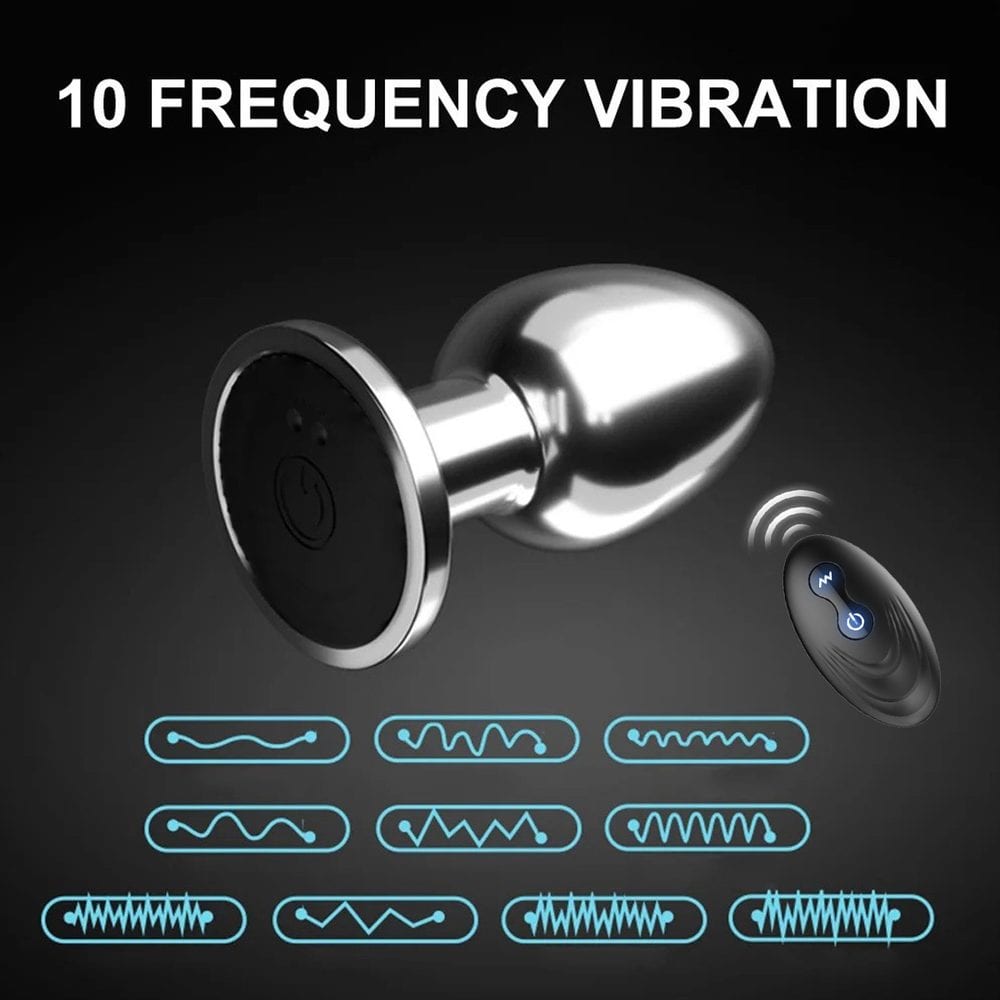
| Want vibration | A vibrating plug with a remote | A remote means you’re not reaching back to change settings | That the setting is reachable without pulling it out |
| Nervous about it going too far in | Any plug with a wide flared base | The base is the whole safety mechanism | The base is at least as wide as the widest insertable point |
| Want to use one with a partner | Silicone, smooth finish | Non-porous and easy to clean between users | Material is named as body-safe silicone, not jelly |
| Sensitive or prone to discomfort | The smallest size, very slow entry | Starting smaller than you think is the reliable way to avoid soreness | Lots of water-based lubricant on hand |
Why the base is the only part that really matters
Every other decision here is about comfort. The base is about safety.
An anal plug sits past the internal sphincter, in a space that has no natural stopping point of its own. A plug with a narrow neck and a base that is barely wider than its widest point can travel further in than intended. That is the failure mode the whole design exists to prevent.
So the check is simple: the base must be clearly wider than any part of the plug that goes inside. Flared, anchor-shaped, T-bar — the shape varies by design, the requirement doesn’t.
If you own a plug and you are not certain the base is wide enough, that is a reason not to use it rather than to try it carefully.
Sizing: smaller than you expect
The most common first-try mistake is choosing a size based on what sounds reasonable rather than what your body has done before. A plug that is easy to insert is the one you can actually relax with.
| If you have | A sensible first diameter |
|---|---|
| No prior experience with anal insertion | The smallest size the product is made in |
| Some experience, but not with plugs | One step up from the smallest, in soft silicone |
| Regular experience | Size up only when the current one goes in with no resistance at all |
The rule that matters more than the table: if it does not go in with gentle, steady pressure and no pain, it is too large — not “almost there”. Stop, and come back another day with a smaller one or more lubricant.
Lubricant: which type, and why it’s not optional
Unlike most other products, an anal plug is used in an area that produces no natural lubrication of its own. Lubricant is not a comfort extra here; without enough of it, insertion is where people hurt themselves.
Use water-based lubricant. The reasoning:
- It works with every material — silicone, TPE, metal, glass — so you never have to check compatibility.
- It’s the easiest to wash off, from both the product and the body.
- If you’re using a condom over the plug, water-based is the only type that won’t weaken it.
What to avoid:
- Silicone-based lubricant with a silicone toy. Silicone lube can break down silicone surfaces over time.
- Numbing or desensitising lubricant. Pain is the signal that tells you to stop. Removing that signal removes your only warning system, and the discomfort it hides is usually a sign of too much size or too little lubricant — both of which have simple fixes.
Apply lubricant to the plug and to yourself. If you think you have enough, add more. Reapplying during use is normal, not a sign you did it wrong.
The step-by-step
- Wash it first. Warm water and mild soap, then dry it completely. A brand-new plug carries manufacturing residue; a stored one carries dust.
- Empty your bladder first. It makes the whole thing more comfortable.
- Set up where you can relax. Somewhere private, unhurried, and where you can stop at any point without explaining yourself. This matters more than any technique.
- Lubricate generously — the plug, and yourself.
- Go slowly. Let your body set the pace. If you feel resistance, hold still rather than pushing through it. Gentle, steady pressure with a pause usually resolves it; force usually doesn’t.
- Breathe out as it goes in. Slow exhales relax the muscles involved. Holding your breath does the opposite.
- Stop when the base sits against the body. If you can feel the base pressing in, the plug is in the right place.
- Stay only as long as it’s comfortable. For a first try, that might be a few minutes. That is a complete, successful session.
How long you can wear one
There is no universal number, and any page that gives you one is guessing. What’s reliable is the decision rule:
| Signal | What it means | What to do |
|---|---|---|
| A full, pressured feeling at first | Normal — the body adjusting | Give it a few minutes |
| Comfortable, and you forget it’s there | The right length of time | Continue while it lasts |
| Persistent ache, burning, or cramping | Time to stop | Remove it calmly and gently |
| Sharp pain | Time to stop immediately | Remove it, and don’t retry that day |
| Numbness or loss of sensation | Time to stop immediately | Remove it |
| Any blood | Stop, and remove it | If it continues, speak to a doctor |
Wearing one for hours is not a beginner goal, and it isn’t necessary for a first session to have “worked”. A few comfortable minutes is a full success.
Do not wear one while asleep. You lose the feedback that tells you something has become uncomfortable.
Removal — and the base question, again
Removal is the reverse of insertion: slowly, gently, with a relaxed body. If the base has slipped inside, that is the situation the wide-base rule exists to prevent, and it needs a calm, unhurried approach — relaxing, lubricating again, and letting it come out rather than pulling.
If it does not come out, do not force it. That is the point to stop and seek medical help — in the UAE that means a GP or an emergency department. This is a known and routinely handled situation; it is uncomfortable to talk about, not dangerous to have treated.
Cleaning, storage and sharing
- Wash after every use with warm water and mild soap. Non-porous materials — body-safe silicone, metal, glass — clean fully.
- Dry completely before storing. Residual moisture is what makes stored products go tacky.
- Store separately from other products, so surfaces don’t press against each other in a drawer.
- For sharing: non-porous materials (silicone, metal, glass) can be washed properly between users. Porous materials (soft TPE, jelly blends) cannot be fully sanitised — use a condom over them if you’re sharing.
Our materials guide covers silicone versus TPE in detail, and the cleaning guide covers the routine.
Sources and further reading
- Anal disorders — MedlinePlus, US National Library of Medicine — background on the anatomy and the conditions that make anal insertion uncomfortable.
- Rectal bleeding — MedlinePlus — what blood after use can indicate, and when it needs a clinician rather than a wait.
- Anal itching and irritation — MedlinePlus — why residual soap or moisture after cleaning causes irritation, and how to avoid it.
- Sexually transmitted infections (STIs) — World Health Organization fact sheet — the WHO position on barrier use when sharing a product between partners.
Key takeaways
- A wide flared base is the one non-negotiable: a base that can pass inside is the most common reason a plug becomes an emergency-department visit.
- Size down. The first plug should be noticeably smaller than what looks comfortable in a photo.
- Water-based lubricant, reapplied — the anus does not self-lubricate, so “enough” is more than most people expect.
- Stop at the first sharp pain or numbness rather than pushing through; a few comfortable minutes is a complete first session.
- Never wear one while asleep — you lose the feedback that tells you something has become uncomfortable.
- Porous materials (soft TPE, jelly blends) cannot be fully sanitised between partners; non-porous silicone, metal and glass can.
Frequently asked questions
Does it hurt?
It shouldn’t. A full, pressured sensation at the start is normal and usually settles within a few minutes. Sharp pain, burning or cramping is not something to push through — that’s your signal to stop.
How do I know if the base is wide enough?
It should be clearly wider than any part of the plug that goes inside. If you have to look closely to tell the difference, it isn’t wide enough.
What lubricant should I use?
Water-based. It works with every material, washes off easily, and is the only type safe with a condom. Avoid numbing lubricants — they remove the pain signal that tells you to stop.
How long can I leave it in?
Only as long as it stays comfortable. For a first session that may be a few minutes, and that counts as a complete session. Don’t wear one while asleep.
Can I share one with a partner?
With a non-porous material — body-safe silicone, metal or glass — yes, washed thoroughly between users. Porous materials like soft TPE can’t be fully sanitised, so use a condom over them.
What should I do if it won’t come out?
Stop and stay calm. Relax, apply more lubricant, and let it come out rather than pulling. If it still won’t, seek medical help — a GP or emergency department. It’s a routine situation to treat, even if it isn’t a comfortable one to raise.
Is a vibrating plug different to wear?
The safety rules are identical — wide base, water-based lubricant, out at the first sign of discomfort. A remote-controlled one is simply easier to adjust without reaching for it.
Can I use one if I have a medical condition?
That’s a question for a doctor, not a guide. If you have a condition affecting that area, or you’re recovering from surgery or a procedure, ask a clinician before using one.
The bottom line
A wide base, plenty of water-based lubricant, a size smaller than you first think, and a willingness to stop at the first sign of discomfort — those four things cover almost every safety issue there is. Everything else is preference.
If you’re choosing one, our complete buying guide covers how to compare any listing, and if privacy is the part you’re unsure about, how discreet delivery works in the UAE walks through the box, the billing line and the courier handover.
Intimate UAE is an educational, judgement-free guide. This is not medical advice.
This is general information, not legal advice.
Explore our store
Visit adulttoysuae.com to view the linked page.
We run this store as well as this guide — links are marked sponsored.